


Welcome to The Gigacasting Newsletter
New here? Subscribe
Tesla Teams Said To Launch Optimus Mass-Production Audits In Ningbo
Unnamed sources relayed by several chinese media outlets say Tesla teams landed in Ningbo on 16 September 2026 and began a new round of audits for the company’s robot business from 17 September, framed as oriented toward serial Optimus output. Related supply-chain orders are said to have already been placed with suppliers.
The same account cites a plan for about 50,000 Optimus units in 2026, destined for Tesla factories worldwide. According to Tesla’s own financial reporting, the Model S and Model X lines at the Fremont, California, plant are offline while Optimus production lines are being installed there, effectively replacing vehicle production.
Optimus has been moving, in public company language, from demonstration and low-volume internal use toward higher factory deployment targets. Earlier internal planning language pointed at roughly ten-thousand-unit yearly ambition before a faster ramp; the Ningbo audit round and the fifty-thousand figure now circulating in the Chinese trade press are the next step in that manufacturing story.
Meanwhile the dedicated factory with a planned capacity of 10 million robots per year is being built at light speed in Austin, Texas.

Tesla Humanoid Robot factory August 2026. Austin, Texas, USA.
Highlighted in blue and red, two different foundations set ups. In blue tighter columns for multi level sections of the factory. In red space for large bays. Large enough to accomodate die casting and plastic injection molding machines for Optimus parts.
Ningde Huizhi Supplies CATL Al Battery Shells From Two 5,000-Ton Die-Cast Cells
Ningde Huizhi Magnesium Aluminum Technology, based in Ningde, Fujian province, supplies aluminum-magnesium alloy battery shells directly to CATL, with deliveries of about RMB 120 million ($17 million) so far this year. The plant has 36 robots and two 5,000 ton ultra-large die-casting units.
According to Fujian Daily, robotic arms in the Huizhi workshop grind and deburr the Al alloy shells as batches come off the line. The company presents the 70% figure as the result of its smart upgrade and says that efficiency advantage is now turning into growth in sales.
The battery shells sit alongside a wider auto-parts business, which Huizhi describes as its core growth segment. That segment and the company's building-formwork work together have reached an output value of about RMB 220 million ($31 million) so far this year, against a full-year target of RMB 350 million ($49 million).
The battery pack shells take a different route from the magnesium battery shells that Estes Energy Solutions of San Francisco is pursuing. On 21 July 2026 Estes emerged from stealth after what it describes as the first commercial shipment of its Magnus battery platform, built around magnesium alloy shells formed by thixomolding, the semi-solid injection process.
Huizhi, by contrast, is a Chinese supplier, not OEM, with an aluminum alloy shell with a high content of magnesium, sold to CATL by using 5,000 ton conventional die casting machines.
Full details on die-casting machines and plants in China are in the Database: www.industryarsenal.com/upgrade
Source: Fujian Daily via Die Casting Weekly
Latrobe Magnesium Reaches 90% Installation On Phase 1B Demonstration Plant
Latrobe Magnesium says installation of its Phase 1B demonstration plant in Victoria's Latrobe Valley, Australia, stood at 90% on 30 September 2026, with dry commissioning under way and magnesium crowns (above 98% Mg) still targeted by the end of 2026.
Phase 1B began in late March 2026 as a high-temperature plant that recovers magnesium metal from industrial ash left by the valley's brown-coal power stations. Installation was at about 50% in late July, reached 70% at the end of August, and climbed to 90% a month later, once the specialist bricklaying for the supporting rails under the reduction furnace's retorts was finished.
Commissioning is 25% complete and the project is forecast to finish within its original A$6.1 million budget.
The watch point is vacuum testing. A retort is a sealed steel vessel inside the furnace where the feed is heated until magnesium turns to vapour, and the condenser attached to it is where that vapour cools and sets into crowns, the solid lumps of metal that are the plant's product.
Air leaking into either part would spoil the process, so all 30 retort and condenser assemblies are being tested under vacuum.
The plant exists to prove the technical model behind Latrobe's larger plans, including the 50,000-tonne-a-year primary magnesium plant it is pursuing in South Carolina.
Robert Stein, a chemical engineer took over as chief executive on 1 October after joining Latrobe on 14 September in a transition role. The company announced his appointment on 23 July, together with the retirement on 30 September of its founder and long-serving chief executive David Paterson, who had led it for some 20 years and remains available to it as a strategic advisor.
Stein brings about 20 years in the resources sector: almost a decade at BHP working on capital allocation and portfolio strategy, then executive leadership of group strategy, planning and evaluation at MMG, and most recently the leadership of Macquarie Group's resources research, covering Australian mining and metals.
He now takes over a company whose Phase 1B plant is in commissioning, and he has said he will review its funding, strategy, organisation and the way it designs and executes capital projects.
Source: Latrobe Magnesium ASX monthly update — 1 Oct 2026
Waffer Technology's 7,000-Ton Thixomolding Machines Started Small Volume Production
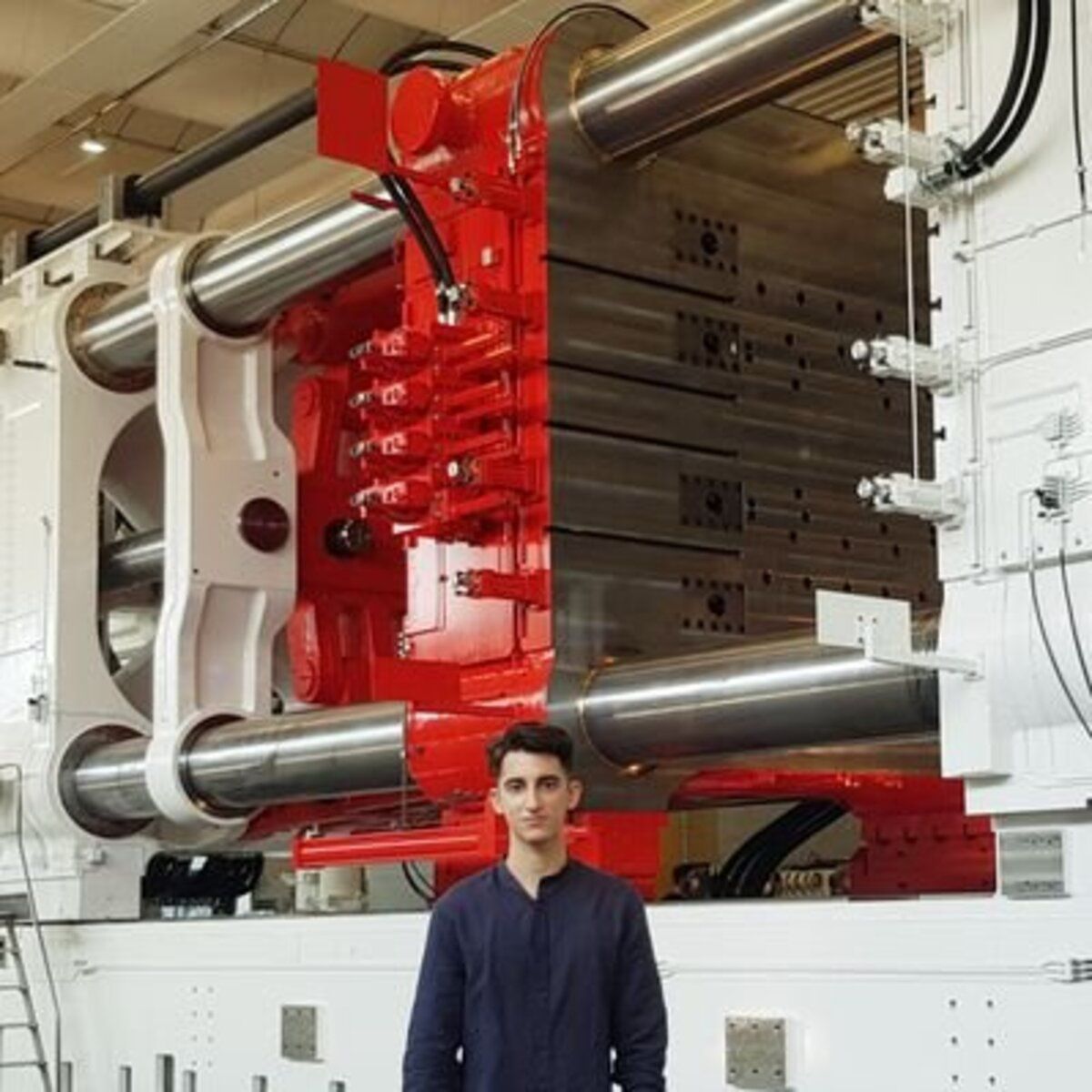
Waffer Technology told investors on 29 September 2026 that its 7,000-tonne dual-injection thixomolding machine has passed testing at its plant in Maanshan, Anhui province, China.
The company's slide deck lists "7000T dual gating thixomolding trial success" in its 2026 timeline. The press was built by Haitian Zhisheng Metal Forming, part of the Haitian group, and carries the model name HMG7000U.
According to Haitian and Waffer, it has a clamping force of 70,000 kilonewtons (kN), roughly 7,000 tonnes, two parallel screws of 180 millimetres in diameter and a theoretical shot weight above 38 kilograms, and the two screws can inject either at the same moment or one after the other (Asynchronous mode).
Waffer says the weight of metal injected per cycle is double that of its 3,000-tonne dual-barrel machine and that the part size it can make approaches a car door. Haitian names the instrument-panel cross-car beam, the C-D pillar, door inner panels, the RUB gigacasting and the tailgate inner panel as the intended parts.
Beyond the press, management told the conference that Waffer makes structural parts for commercial drones at Maanshan for an unnamed Japan-based brand, starting with small production volumes.
Management also made a pricing argument for magnesium: aluminium alloy is currently about 30% more expensive than magnesium alloy by raw-material price per weight in China, which it calls an unusual situation. China spot prices roughly support it. ADC12 aluminium alloy ingot was quoted at RMB 23,640 to 24,000 per tonne (about US$3,330 to US$3,380) by Mysteel on 2 October 2026, against RMB 18,000 to 18,200 per tonne (about US$2,540 to US$2,560) for AZ91D magnesium alloy on 29 September, a premium of roughly 30% to 33%. That compares metal by weight only, before yield, magnesium chip premiums and processing costs.

Large thixomolding machines worldwide are tracked in The Gigacasting Database.


