


Welcome to The Gigacasting Newsletter
New here? Subscribe
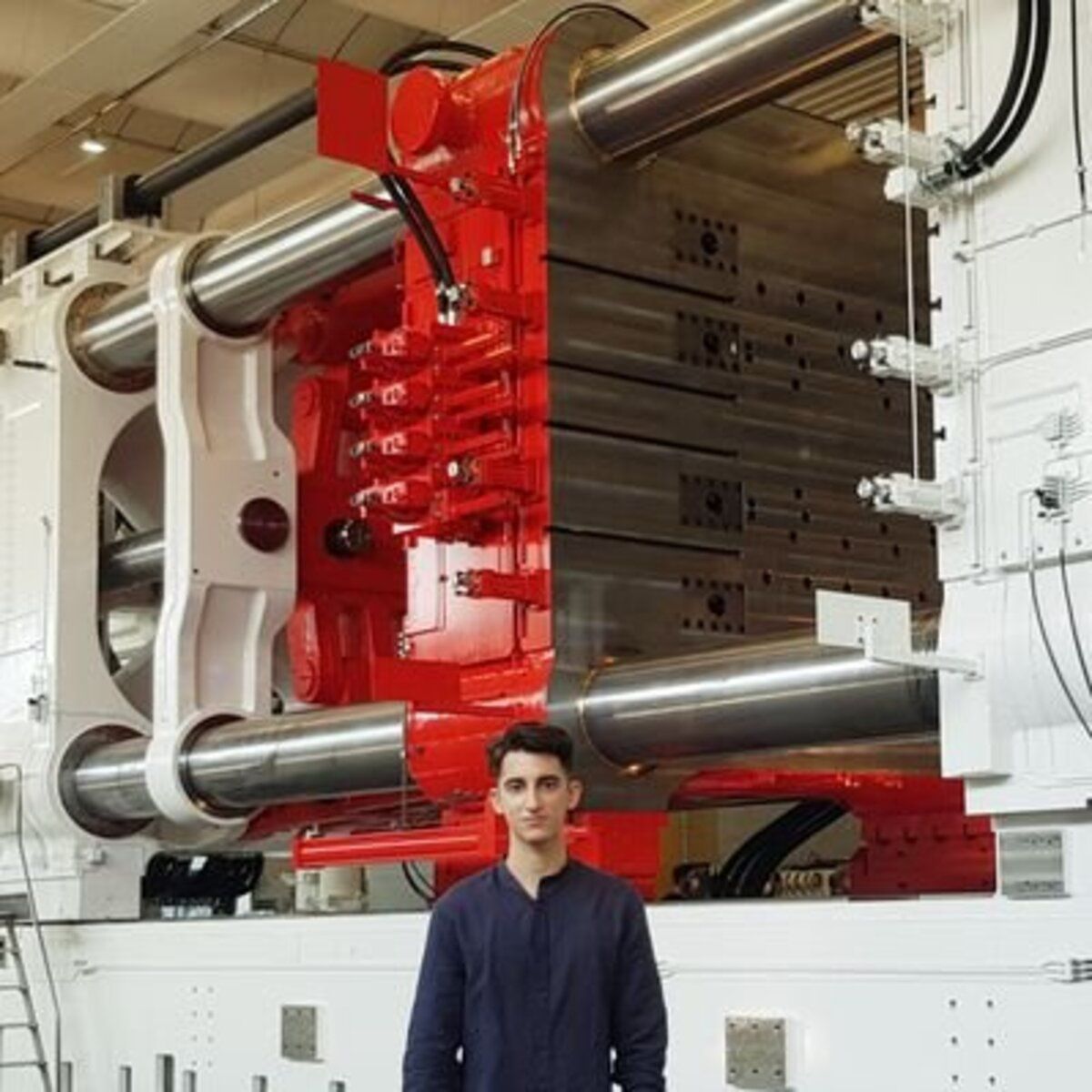
Dongfeng Runs First Sample of DH3 Gigacast Rear Floor
Dongfeng held a first-sample ceremony on 14 September 2026 for a DH3 Gigacast rear floor at its Wuhan Gigacasting workshop.
The part comes off Dongfeng Tech’s 10,000 ton casting island; the project is still in the implementation stage, with first-round trial overall yield said well above the expected target with improvements on planned.
Planned annual capacity for this rear-floor line is 120,000 pieces, meant to cover the DH3 series and follow-on models. The process setup is closed-loop die casting, post-processing, machining, and joining with post-processing fully automated and machining centers self-developed by Dongfeng Tech.
The source frames this DH3 rear-floor first sample as accelerating scale application on Dongfeng’s eπ and Yijing (Huawei “Epicland” JV) series.
Wuhan’s Gigacasting path has run in sequence. The project broke ground in November 2024. By early 2026, the 16,000-ton line’s first battery-enclosure product was trial-produced and delivered.
The shop now has both a 16,000-ton and a 10,000-ton large press in production for NEV mega structural parts (rear floors, battery housings). The new step is the 10,000T island shipping a DH3 rear-floor first sample for the eπ / Yijing line, after the earlier battery-box path on the larger machine. First sample mark trial progress toward the planned 120,000-piece line, not series production yet.

Toyota Plans China-First Next-Gen Lexus BEV With Gigacast at Shanghai
Toyota plans to put its next-generation pure EV into production in China in autumn 2027, as a Lexus SUV. SOP is planned at the new Shanghai plant: about 1,000 units a month at the start, then annual output in the tens of thousands from 2028.
The car is to use Gigacast large aluminum structural castings to cut body part count. Some sources cited in the coverage put weight save on parts of the body structure at up to about 20% versus traditional process, with a few percentage points more range, plus a stiffer body and fewer assembly steps.
My initial coverage in The Gigacasting Database from two years ago was now confirmed with visual proof for the first time; The Lexus Shanghai plant is introducing two 9,000 ton die casting islands made by Haitian.
In 2024/2025 Toyota committed to Gigacast at the wholly owned Shanghai Lexus plant. LF-ZC production plans were later cancelled.
The shop has an ultra-large fully automatic mold-change system, the first of its kind at this scale. Plant images of the install show the automatic mold-change setup on the press line.

Leggera Technologies Breaks Ground On Michigan Addition For New Thixomolding Presses
Leggera Technologies, LLC has broken ground on a 45,000 sq. ft. addition to its Michigan operations, purpose-built for new magnesium thixomolding machines and increased production capacity, via a company LinkedIn post. The company frames it as an investment in Michigan manufacturing and in scaling with customers as demand for lightweight magnesium solutions grows.
Leggera is already an active and leading magnesium thixomolding player in the United States, supplying magnesium thixomolded parts, extrusions, machining, powder coat and assemblying in-house. Customers include Jeep, Ford, Chrysler and Rivian.
In March 2019 it announced an Orion Township, Michigan HQ and manufacturing center: about $17 million investment and roughly 50 jobs over five years, aimed at large-tonnage thixomolding and automated powder coat. The group now runs from two Michigan sites: Orion Township and Holly. The 45,000 sq. ft. addition is the next capacity step.

AgiBot & Minth Start Serial Humanoid Production In Serbia
A humanoid robot factory in Šabac, western Serbia jointly involving Serbia, Shanghai’s Zhiyuan Innovation (AgiBot), and Minth Group officially started mass production.
Serbian President Aleksandar Vučić attended; Minth founder Qin Ronghua was present. Die Casting Weekly calls it Europe’s first Chinese-invested robot factory; Serbian government and wires call it Europe’s first large-scale humanoid mass-production base.
The manufacturing geography is the point: a Chinese auto-parts Tier-1 (Minth, in Serbia since 2018, with 10 factories there) plus a Chinese humanoid OEM planting serial assembly in Europe; A lateral industrial signal next to structural casting capacity.
Phase 1 investment is cited at about €20 million. A planned Robotics Industrial Park in Inđija would bring total planned investment to about €200 million. Upon completion of the broader project, annual capacity is expected up to 20,000 humanoid robots and robotic dogs for Europe and global markets; Vučić hoped the Šabac facility would initially assemble more than 5,000 robots a year.
The maturity of the product remains yet to be seen.
Latrobe Magnesium Pursues 50 ktpa Primary Magnesium Plant in South Carolina
Latrobe Magnesium Limited says it will pursue a 50,000 ton primary magnesium metal plant (Train 1) in Colleton County, South Carolina, USA, with site capacity for a second train to 100,000 tons. The company frames the project as aiming to be the first new commercial-scale primary magnesium producer in North America in decades.
Who would buy the metal matters as much as where it would be made. Non-binding letters of intent already cover about 32,000 tonnes a year, or roughly 64% of the first train’s capacity.
Metal Exchange LLC would take at least 25,000 tonnes; Meridian Lightweight Technologies 5,000 tonnes; and Twin City Die Castings 2,000 tonnes. Those names point at traders and at die-casting users.
On the other side of the plant gate, the feedstock plan is ferronickel slag at about 33% magnesium oxide, under a binding 20-year memorandum of understanding with Société Le Nickel, the New Caledonia nickel company that sits inside the French mining group Eramet. Design throughput is about 340,000 tonnes of slag a year, against an SLN stockpile the company cites at about 28 million tonnes.
The plant itself is framed to ship 99.9% pure magnesium metal plus alloys for casting and extrusion.
Bechtel is named as the preferred engineering partner. Capital cost is put in a range of about US$1.1–1.5 billion, and operating cost at about US$2,600–4,000 per tonne, both factored down from Latrobe’s earlier 100,000 ton/year international plant study by Bechtel, then adjusted for a 50,000-tonne case, a U.S. site, and cost escalation.
South Carolina is still only a preferred location, with land acquisition still under negotiation. State cash, in-kind support, and tax incentives are pending site purchase and a formal application, and they are not baked into those financial outcomes. On the company’s own calendar, a feasibility study sits around January 2028, a final investment decision around March 2028, and first production around April 2030.
Latrobe’s other live track remains the Phase 1B demonstration plant in Victoria’s Latrobe Valley, Australia, which would run on ash from the brown-coal power precinct, with first metal still targeted for the second half of 2026.
Metal from that Victorian demo remains fully allocated to the United States through Metal Exchange. The company says it is now putting commercial priority on the U.S. option, while rights to a Victorian 10,000 ton/year commercial plant stay on hold under trailing-liability constraints.

Source: Latrobe Magnesium
Quick News
Baowu Magnesium Says Large Mg Gigacasting Is Moving Toward Batch Vehicle Use
In a recent investor exchange, Baowu Magnesium said its large magnesium Gigacasting technology continues to make breakthroughs, and that mainstream domestic OEMs and materials firms are accelerating trial production and mass-production validation of magnesium integrated rear-body and battery-pack structural parts. The company claims it is gradually moving from lab R&D into batch vehicle application.
China Magnesium Production in August 2026
China’s national primary magnesium output was about 91,700 tons in August 2026, up 2.69% month-on-month and 13.63% year-on-year, according to incomplete statistics from the China Nonferrous Metals Industry Association Magnesium Branch. Cumulative January–August output was about 784,100 tons, up 23.03% year-on-year.
Through 2026 the national series has kept climbing year-on-year: the January–July cumulative already sat near 692,400 tons, August added another 91,700 tons, and the January–August total now sits near 784,100 tons. The regional split is sharpening toward Shaanxi as the dominant producer.

