


Welcome to The Gigacasting Newsletter
New here? Subscribe
Dongfeng Launches The First Vehicle With The 16,000T Gigacasting Machine
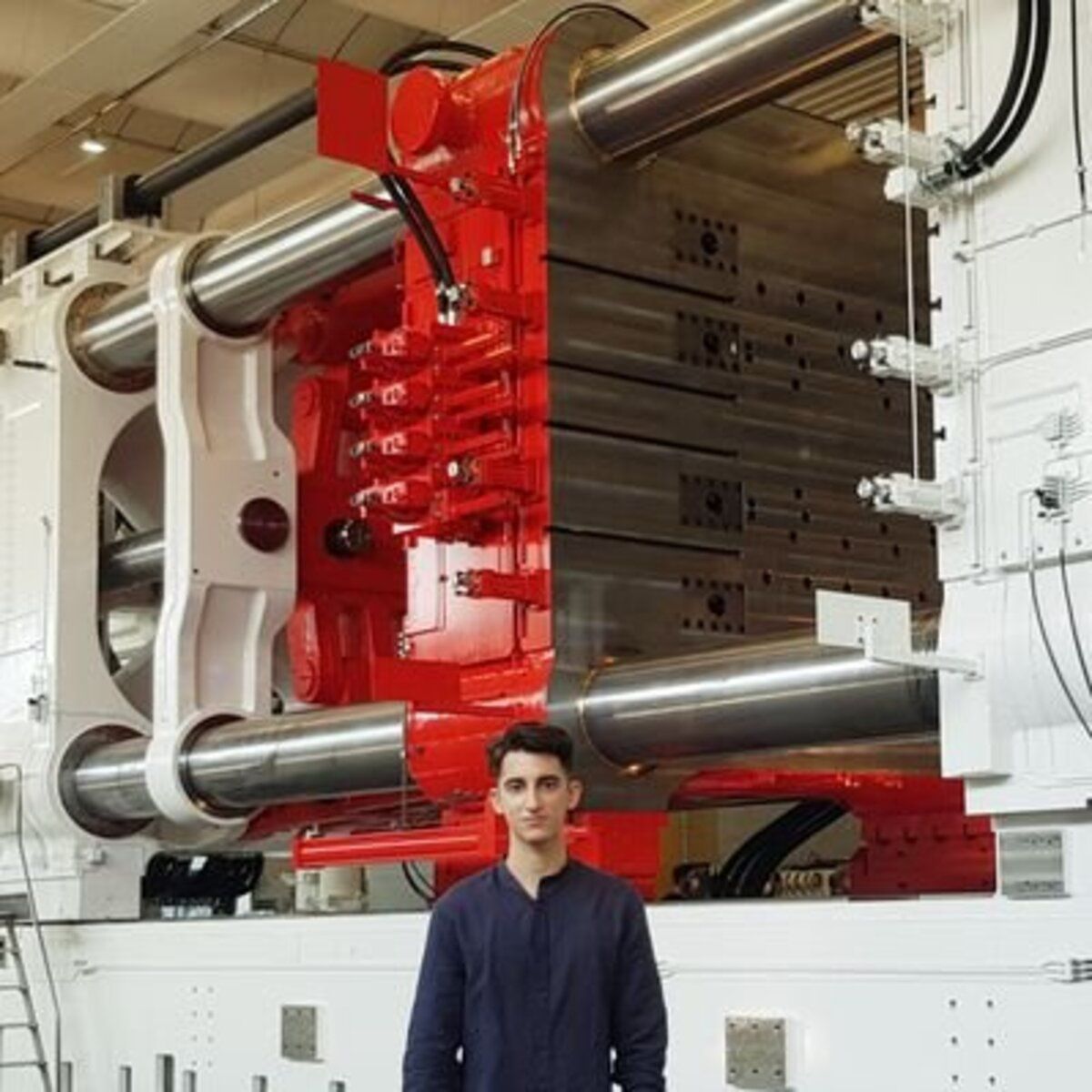
For the long term subscribers of The Gigacasting Newsletter, we have followed the development of this project since its very beginning and now, finally, Dongfeng’s eπ M8 will officially be the first production vehicle to feature the industry’s first 16,000 ton die casted battery tray/casing, in Q3 of 2026.
This one-piece Gigacast component, produced on the world’s largest die-casting machine at Dongfeng’s Wuhan plant, replaces the traditional assembly of ~195 stamped/welded parts that previously took 2 hours.
The new process forms the large ~2 m × 1.3 m battery enclosure in a single shot with a cycle time of roughly 2 and a half minutes, with 135 seconds of just cooling.

Dongfeng is the first Chinese OEM to run its own 16,000 ton Gigacasting in production; the first battery casing rolled off on 21 January 2026, with mass production still to initiate with a proper ramp up.
Check out who else is running 16,000T, 12,000T and all the >6,000T machines in the world in The Gigacasting Database.
Dongfeng launched the project to industrialize ultra-large Gigacast NEV structures, battery trays and front/rear underbodies, two and a half years ago. The Wuhan plant’s phase-1 investment reached ~1 billion yuan; construction of the dedicated facility began in late 2024 and was completed ahead of schedule.
In a 14-month “vehicle-component collaboration” with its R&D institute, engineers ran thousands of computer simulations plus dozens of physical validation rounds to master precision and minimize distortion on such a large casting. The LK 16,000-ton machine entered testing around October 2025, delivering its first series-intent battery casing in January 2026.

Toyota Cancels Lexus LF-ZC Production Plans
Toyota has scrapped development of the Lexus LF-ZC, the next-generation BEV concept unveiled in 2023 that was slated for production around 2026-2027. Technologies developed for the LF-ZC will be transferred to other EV initiatives.
The LF-ZC was intended to pioneer Toyota’s advanced manufacturing approach, centered on Gigacasting and the “unboxed” (or modular) production process. Inspired by Tesla’s methods, in the unboxed process the vehicle body is divided into front, center, and rear modules assembled somewhat independently before final integration.
Self-propelled assembly lines allow partially built vehicles (with battery, motor, and tires) to drive autonomously between stations, eliminating traditional conveyors. This setup offers greater factory flexibility, shorter preparation times, and lower capital investment.
Production was planned at Toyota’s facilities in Aichi Prefecture, Japan (home to Gigacasting testing and initial output), and a new wholly-owned Lexus plant in Shanghai, China. The Shanghai site, with an initial 100,000-unit capacity starting around 2027, was designed specifically around Gigacasting, unboxed assembly, and self-propelled lines for both domestic and export markets.
I reported on this plant installing 9,000 ton Haitian machines before everyone else and it was all in The Gigacasting Database.
While the LF-ZC itself is off the table, these innovative processes are still expected to influence Toyota’s broader EV strategy in the near future.

20th Shanghai International Diecasting & Nonferrous Exhibition
I will attend the International Diecasting & Nonferrous Exhibition. Held at the Shanghai New International Expo Center (Hall N1–N4) From July 15ᵗʰ to 17ᵗʰ.
Under the theme “Twin Engines: Al & Mg, A Lightweight Future”
This is your biggest chance to learn about Gigacasting and magnesium Thixomolding, meet people and companies, directly where most of the innovation in the die casting industry is taking place.
Participate in exclusive tech tours and book your One-to-One meeting with anyone here
Alternatively you can directly contact;
Ms. Tracy Feng | Tel/WhatsApp: +86 13916927105 | Line: +66 980427102 | Email: [email protected]
Ms. Sunny Song | Tel/WhatsApp: +86 13761250456 | Email: [email protected]

Do you plan on visiting the event? If you do write to [email protected] or any of my social media channels and let me know!
Yizumi And Baowu Also Worked On Mg CCB
Baowu Magnesium and Seres have started volume production of a semi-solid magnesium alloy cockpit cross beam (CCB) for the AITO M6 electric SUV. The component is being made using thixomolding (semi-solid injection molding) technology at Baowu’s facility. As reported two weeks ago in Weekly Gigacasting News 55.
The part is described as the world’s first mass-produced semi-solid magnesium alloy CCB for a series-production vehicle.
Two Chinese machinery suppliers have delivered large semi-solid magnesium machines to the same production line. Haitian supplied its customized HMG3600, which has been linked to daily output targets of up to 1,000 parts. Yizumi supplied its UN3200MGⅡ·Plus (180 mm screw diameter) for the CCB program.
Yizumi’s machine entered continuous 24/7 operation shortly after installation. From March 28 to May 19 it ran for 53 days, completing more than 30,000 cycles with a yield rate above 93%. Peak daily output reached 660 pieces.
The magnesium CCB weighs 6.6 kg — roughly 6 kg lighter than traditional steel equivalents. Semi-solid forming produces a denser microstructure with fewer porosity defects than conventional high-pressure die casting, which can translate into better fatigue performance and the ability to design thinner sections where needed while meeting strength requirements.

Changan and Baowu Magnesium Trial-Produce First Magnesium Rear Gigacasting
Changan Automobile and Baowu Magnesium have successfully completed trial production of a magnesium alloy rear underbody Gigacasting in Chongqing. The component met all targets for dimensional accuracy, mechanical performance, and surface quality.
Engineers created a completely new structural design and used simulation optimization. Compared with conventional aluminum rear underbody structures, the magnesium version delivers more than 20% weight reduction while improving overall body structural integrity and crash safety performance.
The partners also developed a new high-performance magnesium alloy. Through advanced composition design, multi-element micro-alloying, and refined grain control, yield strength, tensile strength, and elongation each are reported to be improved by more than 25% versus conventional commercial magnesium alloys.
The team had to solve challenges in high-tonnage clean magnesium melting, complex thin-wall filling, precise mold temperature control, and closed-loop defect management. The first trial achieved a 67% yield rate.
Changan plans to accelerate process optimization toward mass production to support lightweighting of new energy vehicles. Currently, as seen in the past, such projects never entered mass production and are all still in their development stage.
Gigacasting plants using magnesium alloys, vehicle programs with magnesium Gigacasting technoloy and Giga-Thixomolding machines are all tracked in The Gigacasting Database.

Why only ~20% weight reduction — not ~33–36%?
Magnesium’s density is ~1.74 g/cm³ vs ~2.70 g/cm³ for aluminum — roughly 64% of aluminum’s density.
For identical geometry and volume, that implies a theoretical weight saving of ~36%. Many Mg alloys also offer competitive specific strength. Yet real-world structural castings usually deliver often 22–28% with good design.
The key reason is stiffness, not density or strength alone.
Gigacastings are stiffness-driven. Absolute stiffness is the resistance to bending, torsion and deflection under load.
Young’s modulus (E) = material stiffness (how much it resists elastic deformation).
Mg ≈ 45 GPa | Al ≈ 70 GPa
For plates, shells or thin-walled castings in bending, stiffness scales with:
E × t³ (where t = wall/section thickness)
To deliver the same bending stiffness when switching from Al to Mg, thickness must increase by the cube root of the modulus ratio:
t_Mg / t_Al = (E_Al / E_Mg)^{1/3} = (70 / 45)^{1/3} ≈ 1.16
→ ~16% thicker walls needed = only ~25% weight saving.
The gap to the full density-based theoretical saving of 33% comes from the need for modestly thicker sections or adjusted geometry to compensate for the lower absolute modulus.
New Magnesium Thixomolding Bulk Purchase
Ningbo-based Dexin Technology has signed an agreement with Haitian Metal to significantly increase its magnesium alloy production capacity.
Under the deal announced on May 29, Dexin will purchase an additional 15 HMG-series magnesium alloy thixomolding machines (500T–3200T). The new equipment will be deployed across its three major factories in Ningbo, Huizhou, and Chongqing.
Since buying its first machine in 2023, Dexin has acquired over ten units and now operates more than a dozen HMG machines for automotive, robotics, energy storage, and 3C electronics parts.
The deepened partnership extends beyond equipment to joint process optimization, talent development, and exploring new applications in new energy vehicles, humanoid robots, and low-altitude economy sectors.
Magnesium alloy, as the Chinese call it, the “green engineering material of the 21st century,” is central to lightweighting trends in China’s high-end manufacturing.

