


Welcome to The Gigacasting Newsletter
New here? Subscribe
BYD Runs First Trials of a Gigacast Battery Frame

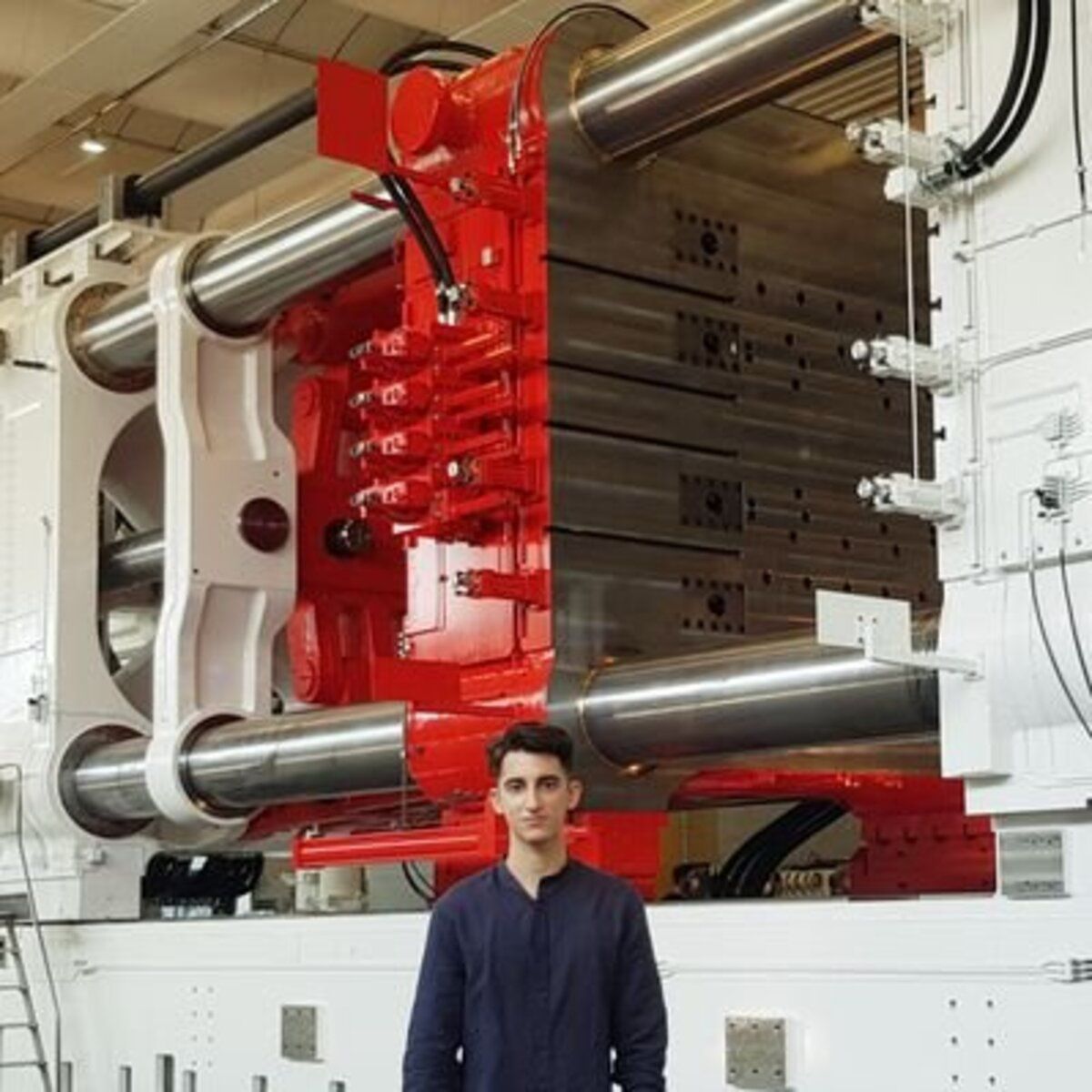
BYD has completed the first trials of a Gigacast aluminum battery frame. The part was produced on the company’s 9,000-ton die-casting machine and is the first battery-frame casting reported to use a mold fully designed and built internally by BYD.
The machine is not new. In late 2024 BYD put 390.5 million yuan (about $54 million) into a Gigacasting shop and one 9,000 t machine, aimed at the development of heat-treatment-free alloys and front and rear underbodies.
By January 2025, 5,000 t and 9,000 t equipment from LK Machinery was installed in Shenzhen for R&D and small volume production. In September 2025, BYD executive He Zhiqi said the 9,000 t line was running, cabin floors that had been 74 stampings were now one aluminum casting, and the molds were made by BYD. Denza’s Zhao Changjiang already listed battery trays among the applications.

Wuling Industry Develops Magnesium Thixo E-Drive Housing
On 19 August, Wuling Industry and Chongqing University successfully developed a magnesium alloy thixomolded electric motor housing.

Starting from the materials side, the project team designed a magnesium alloy that balances strength and ductility, corrosion resistance, and thermal conductivity, with particular attention to flowability for the semi-solid thixomolding process.
The alloy is intended for electric-drive and reducer housings, structural brackets, thermal-management housings, and other lightweight components in high-end equipment.
Wuling Industry has already moved magnesium thixomolding beyond automotive parts. It delivered its first magnesium-alloy humanoid-robot skeleton sample and used that milestone to enter robot structural components.
Building on decades of automotive lightweighting work, the company co-developed a magnesium neck bracket formed by thixomolding. The process is meant to address magnesium’s usual weak points; poor flow and porosity, so that large thin-walled complex parts can be made with high structural integrity.

Source: Die Casting Weekly
Chery Auto Expands Gigacasting and Magnesium Content with New Luxeed RX
On August 28, Luxeed previewed the RX’s body hardware ahead of an August 31 livestream themed “Safety first and more driving fun.”
The new RX from the Luxeed brand, a joint venture between Chery and Huawei, uses a zonal “343” body, defined in this way by what the Chinse call: “Build muscle up front, cut mass in the cabin, shed weight at the rear”
- Front: Two aluminum die-cast shock towers plus a die-cast triangular beam.
- Sides: Hot stamped steel for b pillar and upper frame with two extra-long 2 m+ extruded aluminum rocker beams for the protection of the battery pack.
- Rear: Two die cast C/D pillars plus Chery’s electromagnetic thermal-control Gigacast rear floor. Three large aluminum castings in total. Luxeed says the rear-floor alloy’s yield strength is up more than 55% versus the prior baseline.

Inside the cabin, where the material is not subject to exposure to the environment and corrosion is not a problem, the RX adds eight die cast magnesium parts: seat frames, steering-wheel structure, HUD housing, instrument cross-car beam, and more cabin hardware.
This is not Chery’s first large casting. In 2024 it showed a one-piece underbody on a 13,000-ton dual-injection die casting machine, but the more relevant precursor is the Luxeed V9.
With the V9 Chery and Huawei introduced electromagnetic thermal-control die-casting and claimed a rear underbody that folded 78 parts into one casting and removed about 760 welds. Structural-part mass is cut by 15.5%, which the program links to better efficiency, a lower center of gravity, and improved handling
The RX spreads the die casting process across the body instead of betting on a single gigacasting floor. The 343 architecture with its six aluminum castings replace 172 parts and 1,103 joints; the rear floor alone is said to integrate 94 parts, cut 920 joints, and drop about 15.5% of that mass compared to a traditionally stamped alternative. Claimed torsional stiffness is above 50,000 N·m/deg
Ningbo Huiwang Breaks Ground On Robot And Low-Altitude Lightweight Parts Plant
Ningbo Huiwang Intelligent Technology is building a smart plant for high-performance robot lightweight parts in Beilun, Ningbo. The project was signed in February, land was secured in April, and construction started in June 2026. Die Casting Weekly framed it as leveraging Beilun’s NEV die-cast base into robots and the low-altitude economy.
Nameplate capacity: 2.4 million lightweight parts per year — 600,000 robot motor housings, 1.5 million robot joint arms, and 300,000 low-altitude aircraft motor parts.
Source: Die Casting Weekly

