


Welcome to The Gigacasting Newsletter
New here? Subscribe
Jiangsu Xinyousheng Completes Tech Upgrade With Multiple JSW Magnesium Thixomolding Machines
Jiangsu Xinyousheng has completed a major technical upgrade and capacity expansion. The company introduced multiple JSW magnesium alloy semi-solid injection molding machines in tonnages of 280 t, 650 t, 850 t and 1,300 t. Its new intelligent production lines are now running at full capacity according to Dongtai Daily (local newspaper).
These JSW machines form the core of the capacity expansion upgrade. Magnesium alloy chips are automatically fed through closed pipelines into the machines, where precise temperature control and uniform stirring enable rapid semi-solid molding. The process delivers the structural strength and stability required for automotive parts while achieving significant weight reduction.
With more than ten machines operating at full load, daily output of reaches 20,000–30,000 pieces. The full closed-loop line; Material feeding → thixomolding → CNC machining → assembly → inspection, has strengthened Xinyousheng’s position as a supplier of smart-cockpit components to Audi, Volkswagen, NIO, Lenovo, LG and other major customers.

Source: Die Casting Weekly
Source: Dongtai Daily
Tesla’s On-Site Aluminum Recycling Powers Gigacasting at Scale
Tesla has built one of the most advanced closed-loop aluminum systems in the automotive industry, integrating on-site foundries and melt centers directly with its Gigacasting operations. This infrastructure turns production scrap and external secondary sources into structural castings for vehicles including the Model Y, Cybertruck, and Cybercab, while sharply reducing energy use and emissions compared with primary aluminum.
At facilities such as Gigafactory Texas, the recycling plant sits integrated with the gigacasting shop. Ingates, overflows, defective castings, wheels, and other secondary aluminum feed into gas-fired furnaces operating at approximately 850°C.
The melt is then analyzed and Tesla’s custom alloy is created directly on site.
The alloy tolerates impurities common in post-consumer scrap through targeted additives (manganese, magnesium, vanadium, strontium, silicon) and proprietary metrics (Hard Factor and Advanced Sludge Factor).
The patent states the alloy can incorporate at least 30% scrap aluminum, with potential for much higher levels—approaching nearly 100% under optimized conditions.
Primary aluminum production is highly energy-intensive. Industry data from the International Aluminium Institute show global primary production (mine to foundry) averaging around 15.1 tonnes of CO₂ per tonne of aluminum and roughly 186 gigajoules of primary energy per tonne. Recycled aluminum requires only about 0.52 tonnes of CO₂ per tonne and roughly 8.3 gigajoules per tonne, delivering approximately 95% savings in both energy and greenhouse-gas emissions.
Tesla’s 2025 Impact Report treats aluminum as a material priority precisely because of its contribution to CO₂ emissions. The company has pursued Aluminum Stewardship Initiative (ASI) Performance Standard certification across its supply base, reaching 87% of relevant suppliers overall and 95% for Cybertruck suppliers and has contracted low-carbon aluminum with emissions intensity below 2 tonnes CO₂ per tonne for other components.

Source: Tesla 2025 Impact Report
Guangdong Hongtu’s Die-Casting Capacity Utilization Exceeds 70%
Recently, Guangdong Hongtu disclosed key production and operating data for its die-casting business during an institutional research session. The company’s overall capacity utilization currently remains above 70%. As newly built plants gradually ramp up to full production and capacity continues to climb, overall utilization is expected to rise above 80% going forward.
On product quality, the company’s comprehensive product yield is stable above 94%.
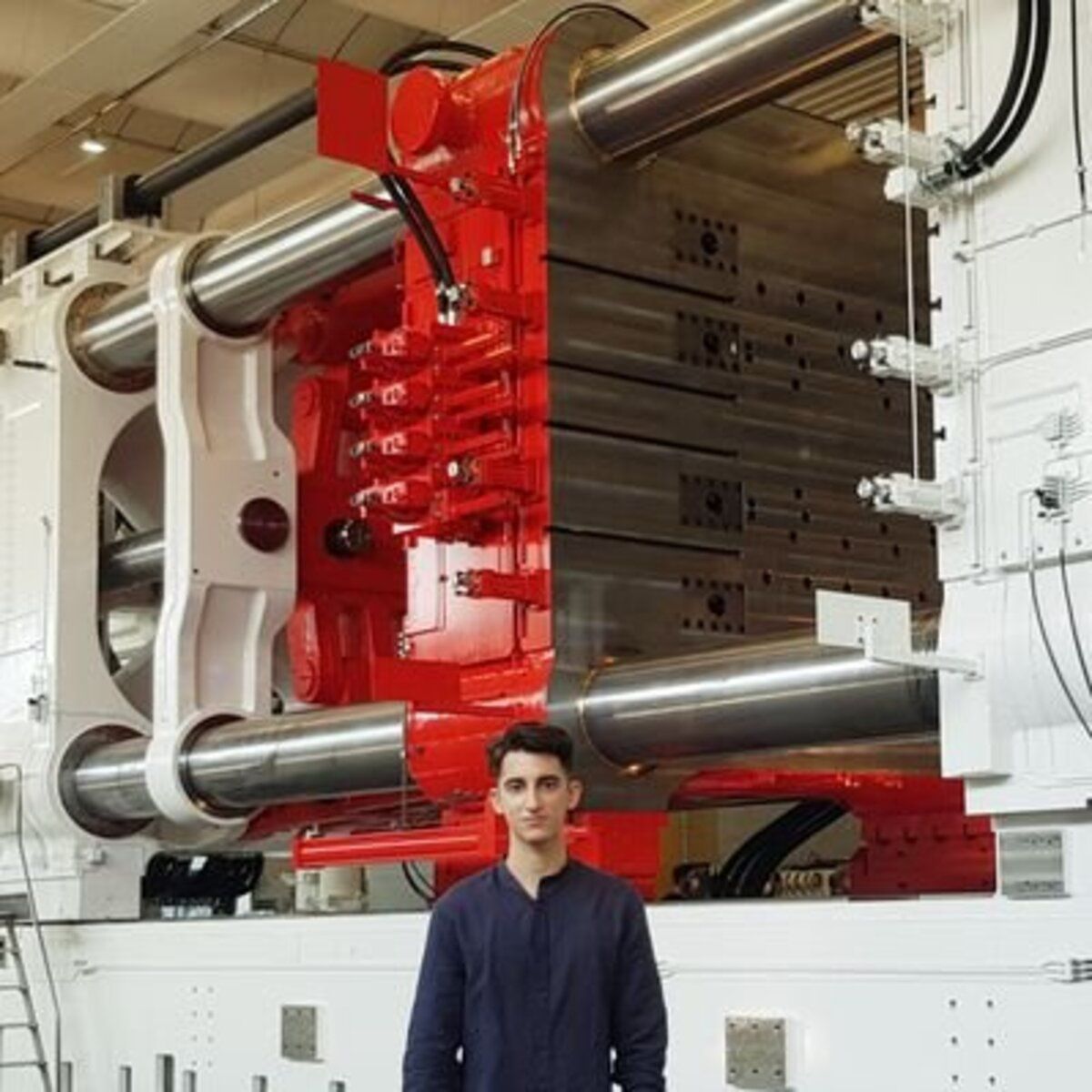
On the equipment side, Hongtu installed several 6,000, 7,000, 9,000, 12,000 and world’s largest 16,000 ton Gigacasting machines.
In China utilization and yield of the >6,000 ton die casting machines is not at a high and sustainable rate for the vast majority of foundries investing in the technology. Guangdong Hongtu reported that their Gigacasting machines are close to 80% utilization, mainly to customers like Xpeng.
Meanwhile Utilization of the 16,000 ton die casting island is relatively lower, mainly due to changes in orders from existing supporting customers.
A complete view of the Chinese Gigacasting market and related forecast to 2030 is available at https://www.industryarsenal.com/products/china-gigacasting-market-report.

Source: Die Casting Weekly
Wuling Industry Uses Magnesium Thixomolding For Robot Skeletons
Wuling Industry successfully completed delivery of the first sample of a magnesium alloy humanoid robot skeleton, marking the company’s formal entry into the humanoid robot components sector.
Leveraging decades of automotive lightweighting expertise, the company co-developed a magnesium alloy neck bracket using Thixomolding as forming technology. The process overcomes magnesium’s traditional challenges; Poor flow and air porosity to produce large, thin-walled, complex parts with high structural integrity.

Compared with aluminum, this topology-optimized magnesium design cuts weight by more than 30%, while offering better vibration damping, electromagnetic shielding, and superior wear and weather resistance through micro-arc oxidation.
With strong cost advantages and technical barriers, magnesium alloy robot skeletons in China are poised for a multi-billion-dollar market in the next years.
On a general note. Foundries that enter the market earlier and take manufacturers on a journey of discovery of die casting technology will be better positioned to capture the largest share of the market. I’m just saying…

