


Welcome to The Gigacasting Newsletter
New here? Subscribe
China Die Casting Exhibition 2026 Recap
From 15–17 July at the Shanghai New International Expo Centre, the 20th edition of Asia’s leading die-casting and non-ferrous exhibition made one thing clear: China’s investments in large structural castings and magnesium are deliberate, coordinated, and already moving from pilot lines into production intent. This is not something the West can treat as distant noise or use as an excuse to stand still.
Two themes dominated every conversation
Everywhere you turned — on the exhibition floor, in technical sessions, and in side meetings — the same priorities kept resurfacing:
Rapid scaling of large structural Gigacastings across multiple OEMs and their supplier networks.
Focused, system-level investment in magnesium alloys, new process routes (especially thixomolding solutions for larger structural parts), and the equipment and process control needed to run them at volume.
The magnesium story stood out most. New alloy development, process refinements, and practical routes to bring thixomolding into larger structural applications are no longer theoretical. The ecosystem — materials, machines, tooling, process know-how, and downstream finishing — is being built with clear purpose. That purposeful build-out creates a strategic gap the West has still not closed.
Western OEMs have announced and invested in gigacasting, yet visible, high-volume results remain limited. Looking ahead, however, the larger expansion growth into structural gigacastings over the next several years is likely to occur in Europe and North America rather than China.
Magnesium, meanwhile, is a sharp reminder that Western supply chains for primary metal remain exposed: price volatility, allocation risk, and geopolitical concentration are real constraints that every program must confront.
China’s progress does not mean the West should concede the field. It means the West must move with equal clarity and urgency on process capability, alloy development, and most importantly a secure and independent supply chain.
Gratitude that made the trip possible
A sincere thank you to FICMES and Lindsay, and to Soartec Consulting, Tracy and Sunny.
Thank you for believing in the project and investing in The Gigacasting Newsletter, many of the meeting that occurred would have not been accessible to me without the people who opened doors and made the logistics and connections work.
To everyone I met
To the customers, long-time followers, and friends I had the chance to meet or reconnect with at the exhibition: thank you. The hallway conversations, booth visits, and late discussions were the real substance of the week.
Seeing familiar faces and meeting new ones for the first time who share the same obsession with process capability, lightweighting, and industrialization made the long travel worthwhile.
More observations and the reasons behind the European/North American expansion thesis will follow in the newsletter…
Estes Energy To Bring Large Magnesium Thixomolding To America
On 21 July 2026, San Francisco–based Estes Energy Solutions emerged from stealth after what it describes as the first commercial shipment of its Magnus battery platform — and with it, a public bet on magnesium alloy battery shells formed by thixomolding.
This is not a cell-chemistry story. Estes says it uses commercially available heavy-cycle cells. The claim is about everything around the cell: a monocast thermo-structural magnesium body, shaped semi-solid, then coated for high-voltage outdoor duty.

About Estes
Founded in April 2024 by engineers from Tesla, Sila, and Cummins (CEO Dustin Grace), Estes raised an $11 million seed round in July 2025 co-led by BMW i Ventures and Fortescue. The target is mass-constrained electrification, rail, marine, aviation, off-highway, Class 8. Estes says it is shipping early systems under signed contracts (no OEMs named) and plans a US giga-thixomolding press at roughly 30 kg per shot, one shot per minute, for the first half of 2027.
Estes' thesis is blunt: electrification is an efficiency problem, and efficiency, at its limit, is a mass problem. The industry optimized the cell; non-cell mass is now the ceiling. Conventional commercial packs, Estes argues, sit around 170–190 Wh/kg at system level; its architecture is marketed above 225 Wh/kg by cutting non-cell mass. For casters: a material lighter than structural aluminum and a process that turns it into a single load-bearing, thermally active shell.


Magnesium is the lightest structural metal in industrial use — about 1.7 g/cm³ versus ~2.7 g/cm³ for aluminum, roughly one-third lighter by volume. Estes also leans on specific stiffness, EMI shielding, and heat capacity per kilogram when the structure itself is the thermal mass.
Magnesium historically failed battery-adjacent structural use on three fronts. Estes answers each: a proprietary MgCarbonit alloy to push ignition above melting (flammability); alloy-level protection plus a multi-layer ceramic/organic Levius coating (corrosion); US/allied feedstock and domestic manufacturing to secure a safe supply chain.
Why thixomolding

Thixomolding is the process Estes chose. Magnesium is processed semi-solid, roughly 580–600 °C, 30–40% liquid fraction. No large melt holding furnace; no cover-gas loop of the kind liquid magnesium HPDC often needs.
For a battery shell, that maps to architecture: thin walls; coolant channels cast into the structural skin, outside the cell cavity; a monocast thermo-structural body that is structure, heat path, and after coating a high-voltage enclosure. A load-bearing component, not just a box.
Scale was the historical limit. For years thixomolding lived on parts under roughly 5 kg but now Chinese programs are already moving much larger applications into mass production. Estes makes the same size bet with a different product and geography: US giga-thixo at about 30 kg/shot and one part per minute.
For more on Estes’ materials, manufacturing, and battery platform, visit estes.energy
Volkswagen Ordered 16 Gigacasting Machines
Volkswagen Group has placed an order for 16 new 9,000-ton die-casting machines to Bühler for their dedicated to front and rear underbody castings on its next-generation EV platform. According to public reports on linkedin.
The allocation could look something like this; 8 machines for Volkswagen, 4 machines for Audi and 4 machines for Škoda.
This is a decisive step beyond the battery-frame strategy first shown at IAA Mobility 2025. At that time Volkswagen confirmed large aluminium battery frames for the Electric Urban Car Family — ID. Polo, Cupra Raval, Škoda Epiq and the production version of the ID. Cross.
Those frames already replace 123 parts, cut weight by roughly 10 % and deliver a reported 15 % cost reduction, all while using a three-plate die process. Front and rear underbody Gigacastings, however, remained undecided.
The new 9,000-ton order signals that the group has now committed to the larger structural castings for the subsequent high-volume platform.
Ordered does not mean installed
Machine orders are only the first step. Installation, commissioning, tooling development and process stabilisation routinely takes months or years, and schedules slip. China has already demonstrated how large the gap between announcements and reality can become: suppliers have ordered multi-machine packages only to see a fraction actually installed and running, while overall utilisation of the installed Gigacasting fleet remains low.
The same caution applies in Europe. Plans can be delayed, phased or even resized once the first pilot castings reveal true cycle times, scrap rates and integration costs with the rest of the body shop.
Volkswagen’s move is therefore best read as a firm strategic signal that demonstrates their commitment to the technology but it’s important to not place too much attention on the numbers. The installation of every single Bühler Carat machine could be delayed by several years depending on the competitiveness of their BEVs.
The Megacasting machines will ultimately support front and rear castings that eliminate dozens of stamped and welded parts, but the timeline from order to series production remains subject to the usual industrial realities.
I’m reporting this news after over one year of being aware of this information. The reason is that the silence was broken publicly by a post on linkedin.
This development fits the broader pattern tracked in the Gigacasting Forecast Report for Europe, North America, Japan and Korea. The report models platform-level adoption, machine installation rates, and realistic capacity scenarios through 2035 — including the precise order-to-install gap that has already appeared in China and is now relevant for every Western programme.
For the continuous, machine-by-machine view (ordered vs installed, location, OEM allocation, and actual production use), the Gigacasting Database remains the single source that separates announcements from verified reality. With the yearly subscription you also get full access to The Gigacasting Forecast Report and Chinese Market Report.
Full forecast report:
Database access:

credit: Volkswagen
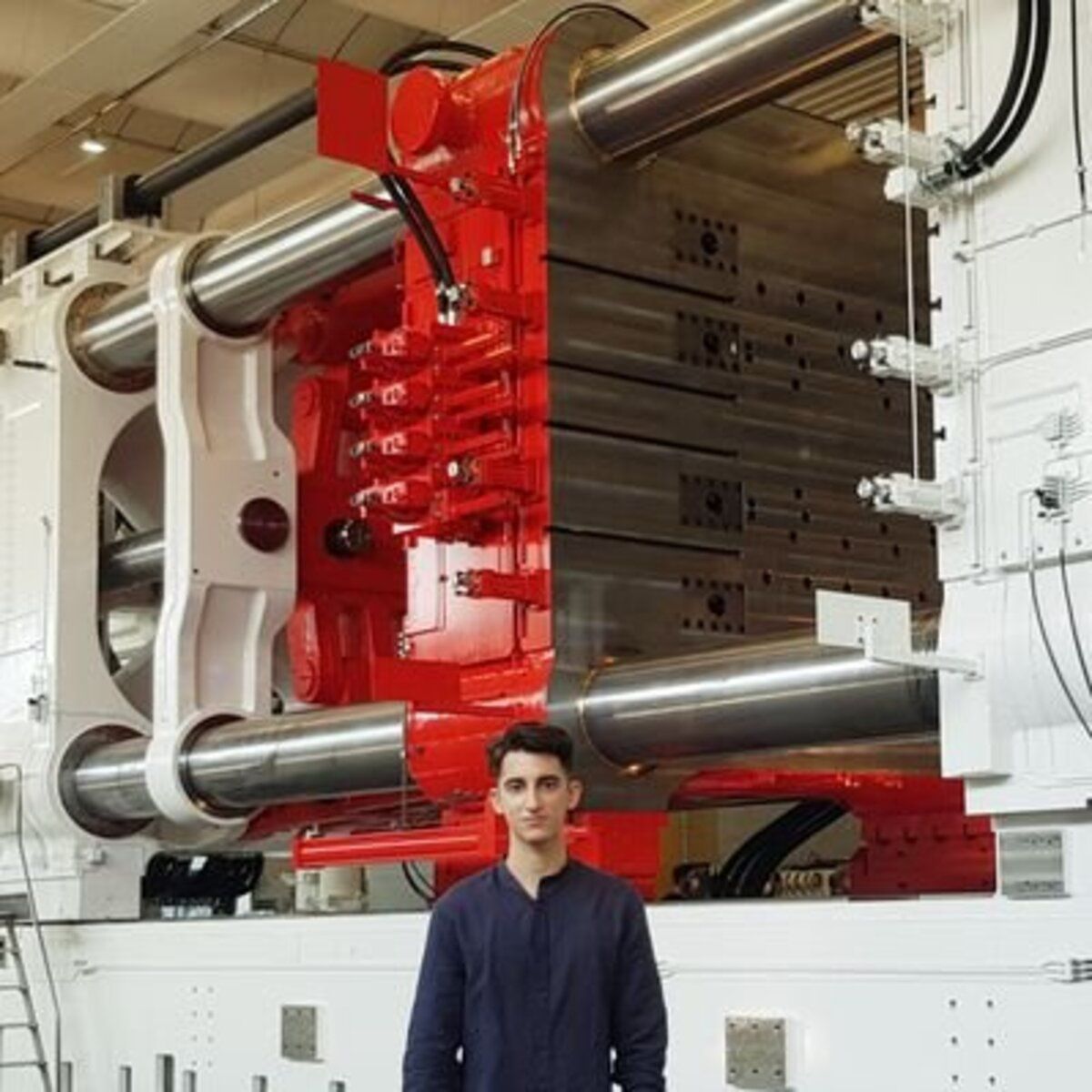
Toyota, One Machine Installed, One to Go
The first 9,000-ton die-casting machine for Lexus’s fully owned pure-electric vehicle plant in Shanghai is set to be delivered and installed in the near term, marking a concrete step forward in the project’s equipment phase.
This development builds directly on Toyota’s February 2025 announcement that Lexus would establish a wholly owned production facility in Shanghai dedicated exclusively to pure electric vehicles. The plant is planned with an initial annual capacity of 100,000 units and is scheduled to begin production in 2027.
As previously reported, the facility is expected to adopt Gigacasting technology and will manufacture a Lexus, previously the LF-ZC which is now cancelled. Subsequent details contained in the factory permits have confirmed both the technology choice and the model association.
Once operational, the Shanghai plant will become China’s first wholly owned automotive manufacturing site by a foreign company after Tesla’s Giga Shanghai opened in 2019. It is designed to serve both the Chinese domestic market and overseas demand, with approximately 20 percent of output earmarked for export to Europe and Southeast Asia.
Manufacturing at the site will rely on Toyota’s most advanced production methods, including Gigacasting, self-propelled production lines, and an unboxed assembly process. These approaches are intended to lower overall factory investment while shortening the timeline required to reach mass-production readiness.
Earlier exclusive information from Die-Casting Weekly indicated that Toyota signed a contract for 9,000-ton die-casting machines for the Lexus Shanghai plant, with Haitian identified as the supplier. The forthcoming delivery of the first unit moves that procurement to its physical realization.
The facility covers 615,700 square meters and is being developed in three distinct phases:
- Phase one comprises stamping, die casting, body-in-white, painting, general assembly, and battery-pack assembly.
- Phase two adds a dedicated battery workshop together with an office building.
- Phase three expands the stamping and die-casting capacity and introduces a further battery workshop.
The arrival of the first ultra-large die-casting machine therefore represents a visible milestone on the path to the planned 2027 start of production and underscores Lexus’s commitment to localizing next-generation electric-vehicle manufacturing in China.

📧 This newsletter was sent to over two thousand industry professionals just like you
🎯 If you want to target a very specific audience in the die casting field, there is no better medium than The Gigacasting Newsletter
🧐 If you are interested in advertising, just reply and ask for more information or click the image below


