

Welcome to The Gigacasting Newsletter
New here? Subscribe
JSW Expands Its Thixomolding Machinery Portfolio
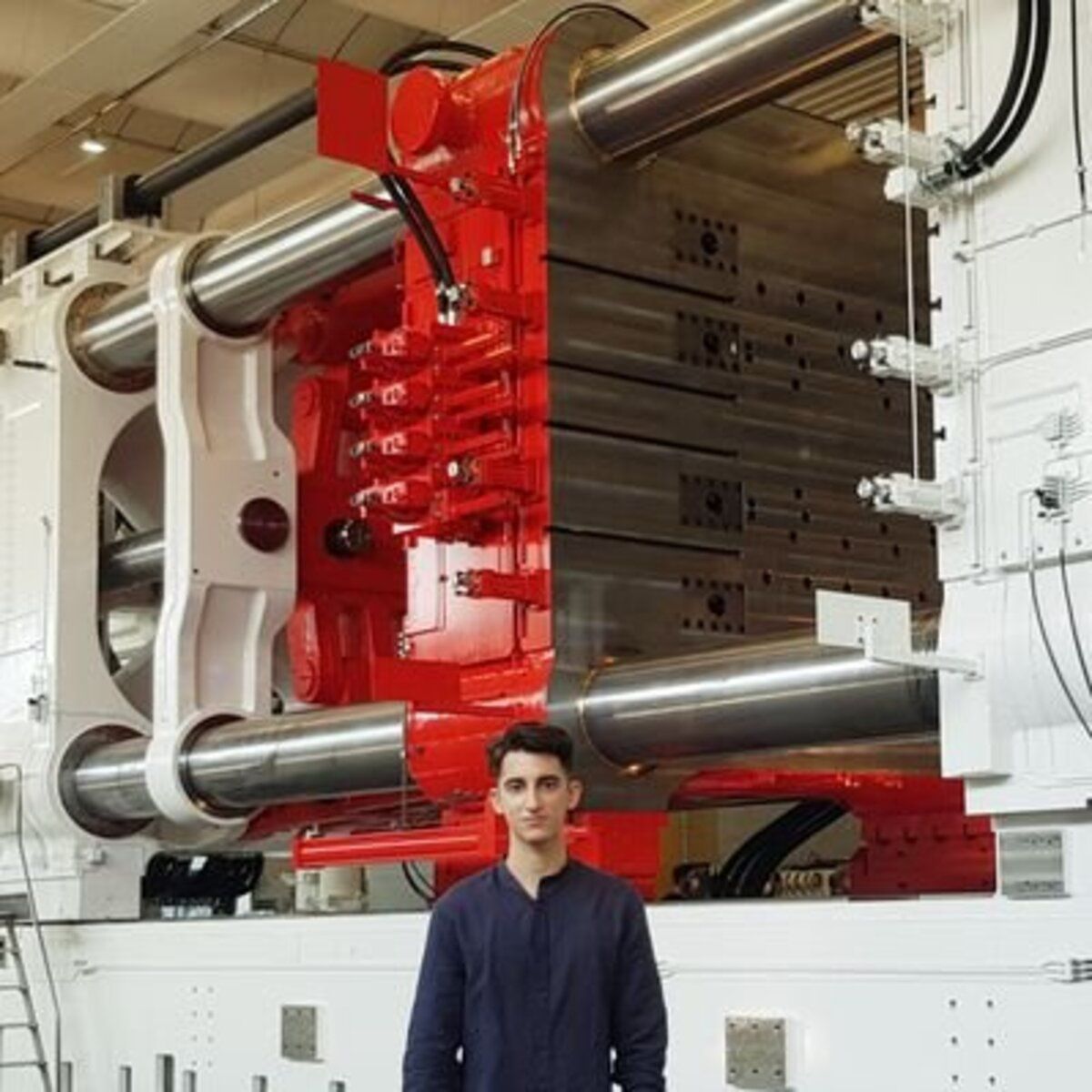
Japan Steel Works launches new 1,800-ton magnesium Thixomolding machine as demand for magnesium components grows
JSW already manufactures machines up to 3,000 tons with dual injection screws.
The introduction of the JLM1800-MGⅡeL fills the gap between their 1,300T and 3,000T models, a direct response to increasing use cases for magnesium components.
The new machine will have an electric clamping unit to increase efficiency and generate a clamping force of 1,800 tons (17,700 kN). The barrel and screw will have a shot weight of more than 5 kg.
The automotive market is driving this expansion. Larger EV displays need larger magnesium frames. More applications mean more machine sizes needed.
But that's not all; Lighter structural components in EVs, drones, humanoid and industrial robots are also heavily impacting demand for magnesium components.

Occasion! 3,500 T Die Casting Machine
🚀 Rare Opportunity: Brand-New, Never-Used 3500-Ton LK Impress Plus DCC Cold Chamber Die Casting Line – Fully Integrated & Ready to Ship! Featuring:
LK Impress Plus DCC 3500 (high-speed injection ≥8 m/s, advanced controls, precision for large aluminum parts)
Top-tier Støtek melting, holding, and dosing furnaces (two chamber gas fired melting shaft, melting capacity approx. 1.5t/h)
Fully automated setup including robot integration, trim press, and more.
Installed & commissioned in 2022 — zero production hours, like stepping straight from the factory floor.
Located in Gothenburg, Sweden — perfect to scale fast without long lead times or new-machine pricing.
Don't miss this one-of-a-kind chance — view full specs, photos, and bid now before it's gone! check it out now!

Ford Unveils More Detail About Its Unicasting
Ford just released new information about The Universal EV Platform which leverages Gigacastings, or as Ford refers to them “Unicasting”, to reduce the total number of parts by 75% compared to a conventional pick up truck body.
Last week Ford released a new video focused on the engineering aspects of electric vehicles, touching topics like, aerodynamics, batteries, intelligence cost savings and lightweight solutions.
Of course, Unicasting were a big part of it.
The video starts with “Weight is another one of our greatest efficiency robberies. Our engineering team had a philosophy; Best part is no part.”
Ford's Unicasting philosophy is perfectly outlined in these two sentences.
• Objective number one is weight.
The front casting and rear casting especially are not designed to achieve the greatest reduction in parts, therefore wide flat surfaces are excluded from the rear.
In fact, Ford’s castings are 27% lighter compared to Tesla’s 2022 Model Y.
Therefore we can estimate the front and rear castings to weigh <65 and <45 kg respectively.
• Objective number two; Part reduction —> Cost reduction.
The two Unicastings will eliminate 146 different parts in the front and rear of the platform. Bringing a massive 66% reduction in welds and 25% reduction in fasteners.
Background
On August 11, 2025, Ford announced a $2 billion investment to transform its Louisville, Kentucky, assembly plant to produce affordable electric vehicles. This move aims to accelerate mass adoption of EVs and reverse the persistent losses in Ford’s EV division.
Ford’s new Universal EV Platform will enable the mass production of a diverse range of affordable vehicles. The platform’s first offering, a mid-size electric pickup truck, is set to launch in 2027, followed by crossover SUVs, ride-hailing vehicles, and other models.
The Universal EV Platform, replaces the traditional single conveyor belt with a three branch assembly line; one for the front, one for the rear, and one for structural batteries, seats, center consoles, and carpets.
These components are then integrated into a complete vehicle, reducing workstations by 40% and increasing production speed by 15%.

Ford is the fourth automaker to announce the adoption of gigacastings combined with an “unboxed” assembly process. Tesla and Toyota revealed plans for similar assembly lines in 2023, while China’s GAC confirmed it will implement this production method for its next generation platform in 2026.
FAW New Magnesium Drive Unit
Hongqi, a FAW brand, announced that its R&D center has successfully developed a high-performance magnesium alloy housing for an electric drive unit “HDU35”.
This is a magnesium die casted component developed by the Hongqi R&D center in collaboration with FAW Foundry.
FAW Foundry is FAW’s department with the highest focus on magnesium alloys. heir competences include the development of dedicated molten magnesium handling equipment, large structural castings and semi-solid injection molding.
Compared to the traditional aluminum alloy solution, this magnesium alloy shell reduces the weight of a single unit by 10 kg, marking substantial progress in more efficient lightweight motors for EVs.
This electric drive assembly will be simultaneously installed in Hongqi's under-development models for road testing.

Tesla Cybercab Castings Update
The rear sub-assembly of the Tesla Cybercab is an hybrid body design which incorporates two (at least) large aluminum die casted components and stamped panels.
We finally have a higher definition image of the rear sub assembly of the vehicle and we can outline the different parts.
Notably, the large underbody Gigacasting forms the base of the entire structure while the newly spotted C-shaped casting forms the upper frame of the rear sub-assembly.
These design choices is what contributes the most to the 60% part count reduction of the Tesla Cybercab BiW compared to the Tesla Model Y.


