


Welcome to The Gigacasting Newsletter
New here? Subscribe for weekly updates
Volvo Cars has been casting the one-piece aluminium rear underbody of the EX60 in series production at its Torslanda plant in Sweden since the end of April 2026, on two Bühler Carat 840 cells. Casting and machining now run around the clock.
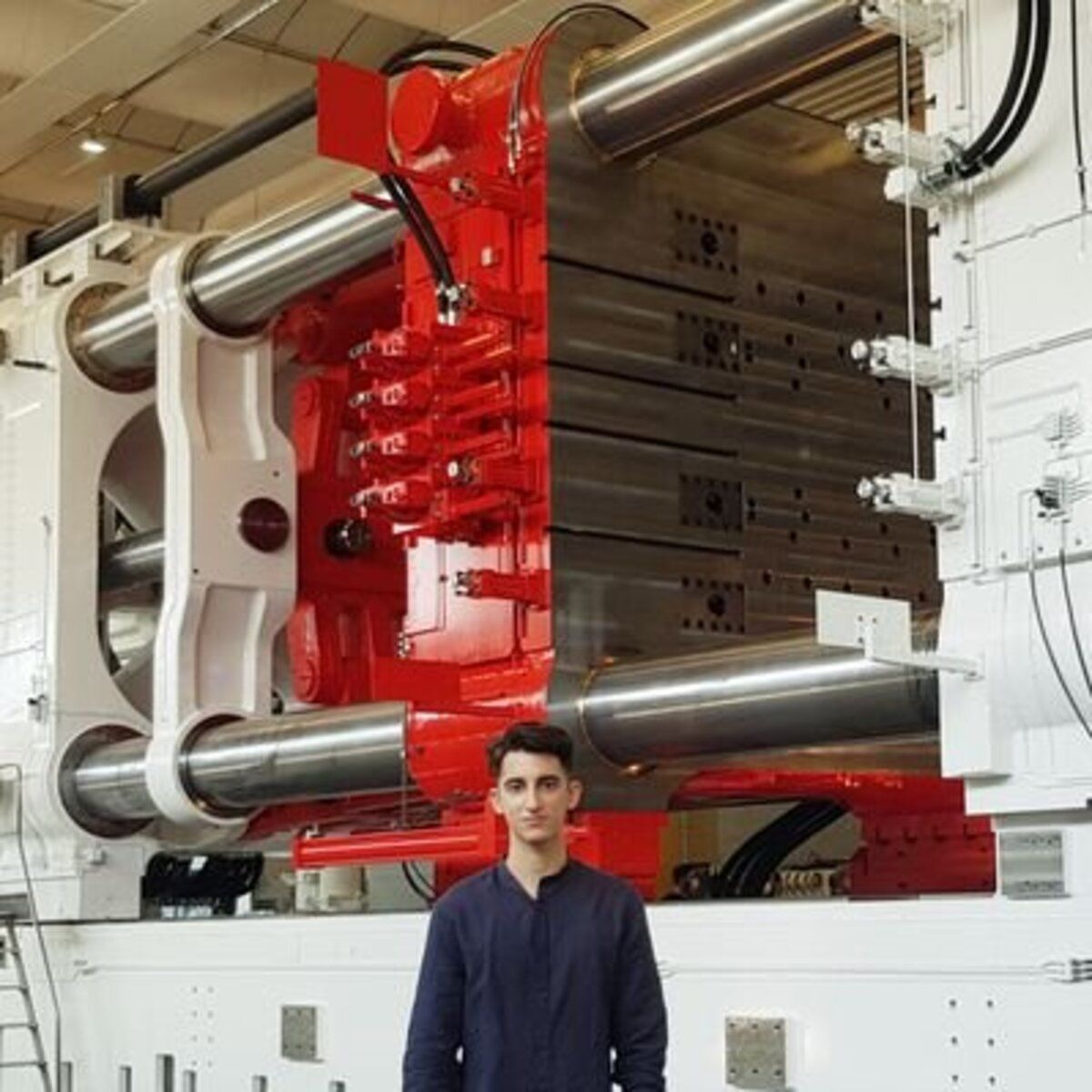
The single casting replaces around 100 stamped and assembled parts. According to Bühler, each Carat 840 has 8,400 tonnes of locking force and can inject more than 200 kg of molten aluminium into the die in milliseconds. Each complete cell is 7.6 metres tall, takes up about 160 square metres and weighs more than 1,000 tonnes once installed, and bringing the two cells to Torslanda took 120 truckloads.
The rear underbody comes out of a 130-tonne die with modular inserts, so single sections can be swapped when the design changes without replacing the whole die. The EX60 sits on Volvo's new SPA3 electric platform, where the battery is a load-bearing part of the structure.

Source: Volvo Cars (via Bühler)
Plant manager Peter Schüler told the Swedish magazine Bergsmannen that the first prototype was cast in Torslanda in March 2024. About 100 people work in the new operation, some hired from outside as experts and some moved over from the existing Torslanda works. "The capacity of the Torslanda plant is 60 cars an hour, and we are gradually scaling up production in the foundry," he said. With the old stamped-steel rear floor, roughly half of the material ended up as scrap sent back to the supplier. Now everything Volvo buys is remelted in its own production.
The team checks 230 parameters on every shot, 25 of them critical, to make the process as repeatable as possible. The plant was built to Volvo's specifications and supplied by Bühler, in a separate new building that went up without disrupting existing production, and its melting line is heated with natural gas. Schüler sees front body parts as a possible next step, once the rear floor is fully mastered, and expects megacasting to become an industry standard.
The road to this point runs through 2024, when two Bühler machines of about 8,500 tons were confirmed at Volvo's Daqing plant in China, and Volvo then laid out its megacasting plans at its Capital Markets Day. In Torslanda, a dedicated hall was built for the two Carat 840 cells, and by late 2025 the line was getting ready for its first mass production. On 21 January 2026, Volvo unveiled the EX60, its first car designed and built around a megacast rear underbody.
Meanwhile, Volvo's new plant in Košice, Slovakia, is installing two IDRA machines of about 9,000 tons, and Schüler confirms it will use the same technology.
Volvo's machines in Sweden, Slovakia and China are tracked in the Gigacasting Database.
Source: Bühler via Foundry-Planet — 21 Oct 2026; Bergsmannen — 9 Oct 2026

