


Welcome to The Gigacasting Newsletter
New here? Subscribe for weekly updates
China FAW has developed and successfully assembled its first magnesium alloy Thixomolded seat frame.
In the global push for automotive lightweighting and low-carbonization, magnesium alloys stand out for their low density, high specific strength, and excellent vibration damping, making it ideal for passenger cars.
Recently, Hongqi’s R&D team announced that the seat frame assembly has passed function adjustment tests and is now entering strength/durability bench and full-vehicle testing.
To achieve lightweighting and high performance, the R&D team innovated across materials, processes, and structure.
They mastered specialized magnesium slurry refinement and virtual process simulation to improve mechanical properties and internal quality.
Structurally, they consolidated 19 parts into just 4 magnesium components while retaining the seat’s 8-way adjustment function.
This reduces assembly steps, boosts production efficiency, and cuts weight by 1.35 kg per set, a 26% reduction versus traditional steel.
Developed on Hongqi’s modular seat frame platform, its designed to be adaptable across multiple models in order to minimize mold-change costs and laying a strong foundation for large-scale mass production.

This seat developed and produced in collaboration with Baowu Magnesium is not FAW’s only magnesium product.
FAW Foundry engaged in a lot of research, development and production of magnesium die casted and thixomolded products. Here’s an overview from previous articles published in The Gigacasting Newsletter.
Magnesium alloy Thixomolded battery end plate sample delivered to a customer.
The mold features a multi directional core pulling structure, allowing full lateral core pulling molding for all holes. This design eliminates additional machining steps, reducing manufacturing costs by 20%.
The component's strength is 10% higher than that achieved with traditional processes, due to the lower air and shrinkage porosity obtained by Thixomolding.
FAW estimates a single machine can produce up to 2,400 units daily. The battery end plate has an area of just a few centimeters.

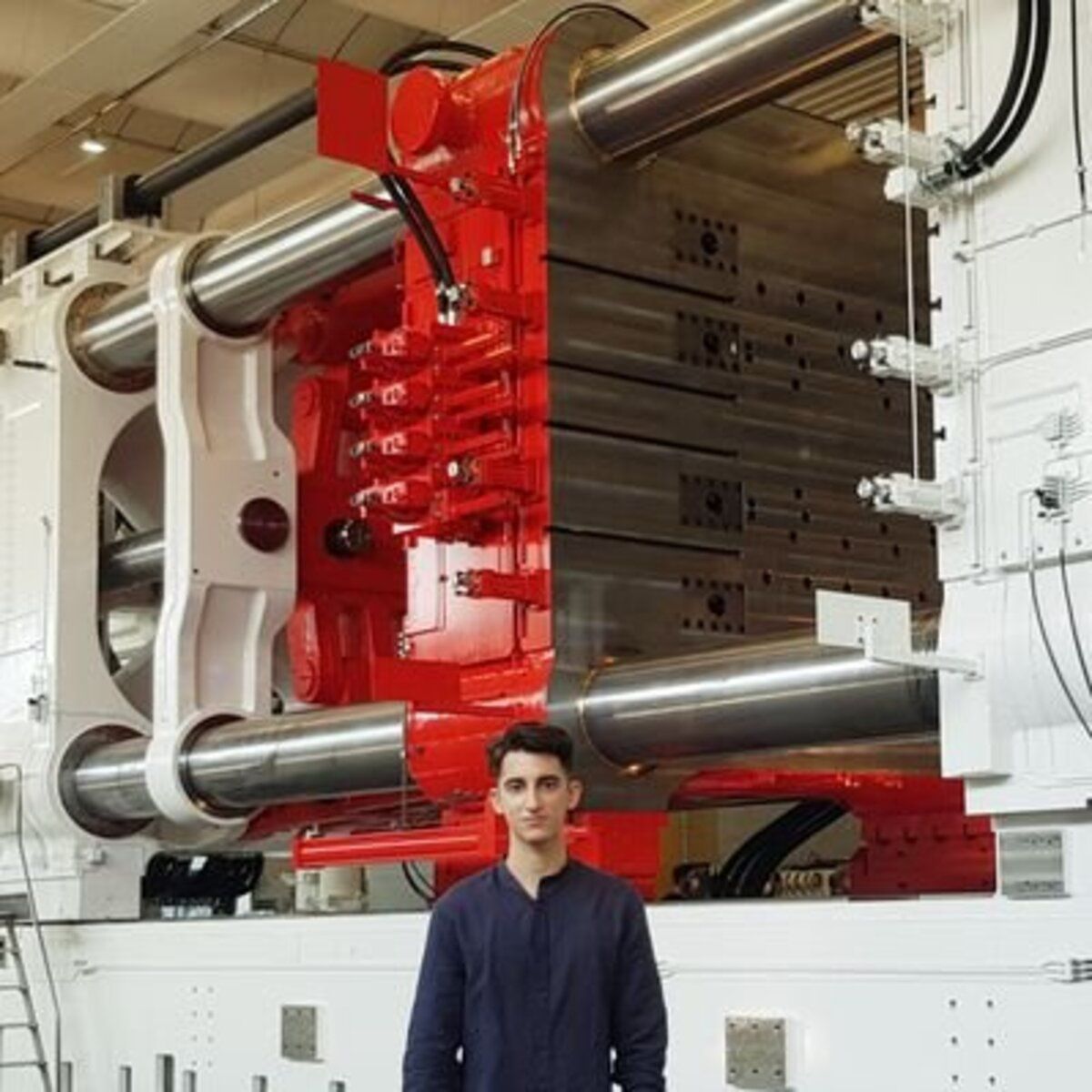
FAW has made significant strides in establishing its magnesium alloy production base. Their facility in Changchun has successfully installed and commissioned an 850 ton magnesium alloy thixomolding machine along with CNC machines, and deburring systems.
Following the successful trial of the automated production process on August 6th 2025, the plant has now achieved full-scale production for instrument brackets. Steering wheel frames are next.
A 3,600 ton magnesium thixomolding machine is being installed and will produce door inner panels, full cross car beams (CCB) and other structural components for vehicles.

1,100 samples of independently developed magnesium alloy thixomolded end plates from FAW Casting & Forging R&D Institute passed batch installation verification and enabled small-batch supply utilizing a dual cavity mold at the end of 2025.
FAW noted that the semi-solid process significantly reduces defects such as shrinkage porosity compared to traditional casting methods, thereby helping to ensure better mechanical properties and thinner walls.

In February of 2026, Hongqi, a FAW brand, announced that its R&D center has successfully developed a high-performance magnesium alloy housing for an electric drive unit “HDU35”.
This is a magnesium die casted component developed by the Hongqi R&D center in collaboration with FAW Foundry.
Compared to the traditional aluminum alloy solution, this magnesium alloy shell reduces the weight of a single unit by 10 kg, marking substantial progress in more efficient lightweight motors for EVs.


