

Welcome to The Gigacasting Newsletter
New here? Subscribe for weekly updates
On 21 July 2026, San Francisco–based Estes Energy Solutions emerged from stealth after what it describes as the first commercial shipment of its Magnus battery platform — and with it, a public bet on magnesium alloy battery shells formed by thixomolding.
This is not a cell-chemistry story. Estes says it uses commercially available heavy-cycle cells. The claim is about everything around the cell: a monocast thermo-structural magnesium body, shaped semi-solid, then coated for high-voltage outdoor duty.

About Estes
Founded in April 2024 by engineers from Tesla, Sila, and Cummins (CEO Dustin Grace), Estes raised an $11 million seed round in July 2025 co-led by BMW i Ventures and Fortescue. The target is mass-constrained electrification, rail, marine, aviation, off-highway, Class 8. Estes says it is shipping early systems under signed contracts (no OEMs named) and plans a US giga-thixomolding press at roughly 30 kg per shot, one shot per minute, for the first half of 2027.
Estes' thesis is blunt: electrification is an efficiency problem, and efficiency, at its limit, is a mass problem. The industry optimized the cell; non-cell mass is now the ceiling. Conventional commercial packs, Estes argues, sit around 170–190 Wh/kg at system level; its architecture is marketed above 225 Wh/kg by cutting non-cell mass. For casters: a material lighter than structural aluminum and a process that turns it into a single load-bearing, thermally active shell.


Magnesium is the lightest structural metal in industrial use — about 1.7 g/cm³ versus ~2.7 g/cm³ for aluminum, roughly one-third lighter by volume. Estes also leans on specific stiffness, EMI shielding, and heat capacity per kilogram when the structure itself is the thermal mass.
Magnesium historically failed battery-adjacent structural use on three fronts. Estes answers each: a proprietary MgCarbonit alloy to push ignition above melting (flammability); alloy-level protection plus a multi-layer ceramic/organic Levius coating (corrosion); US/allied feedstock and domestic manufacturing to secure a safe supply chain.
Why thixomolding

Thixomolding is the process Estes chose. Magnesium is processed semi-solid, roughly 580–600 °C, 30–40% liquid fraction. No large melt holding furnace; no cover-gas loop of the kind liquid magnesium HPDC often needs.
For a battery shell, that maps to architecture: thin walls; coolant channels cast into the structural skin, outside the cell cavity; a monocast thermo-structural body that is structure, heat path, and after coating a high-voltage enclosure. A load-bearing component, not just a box.
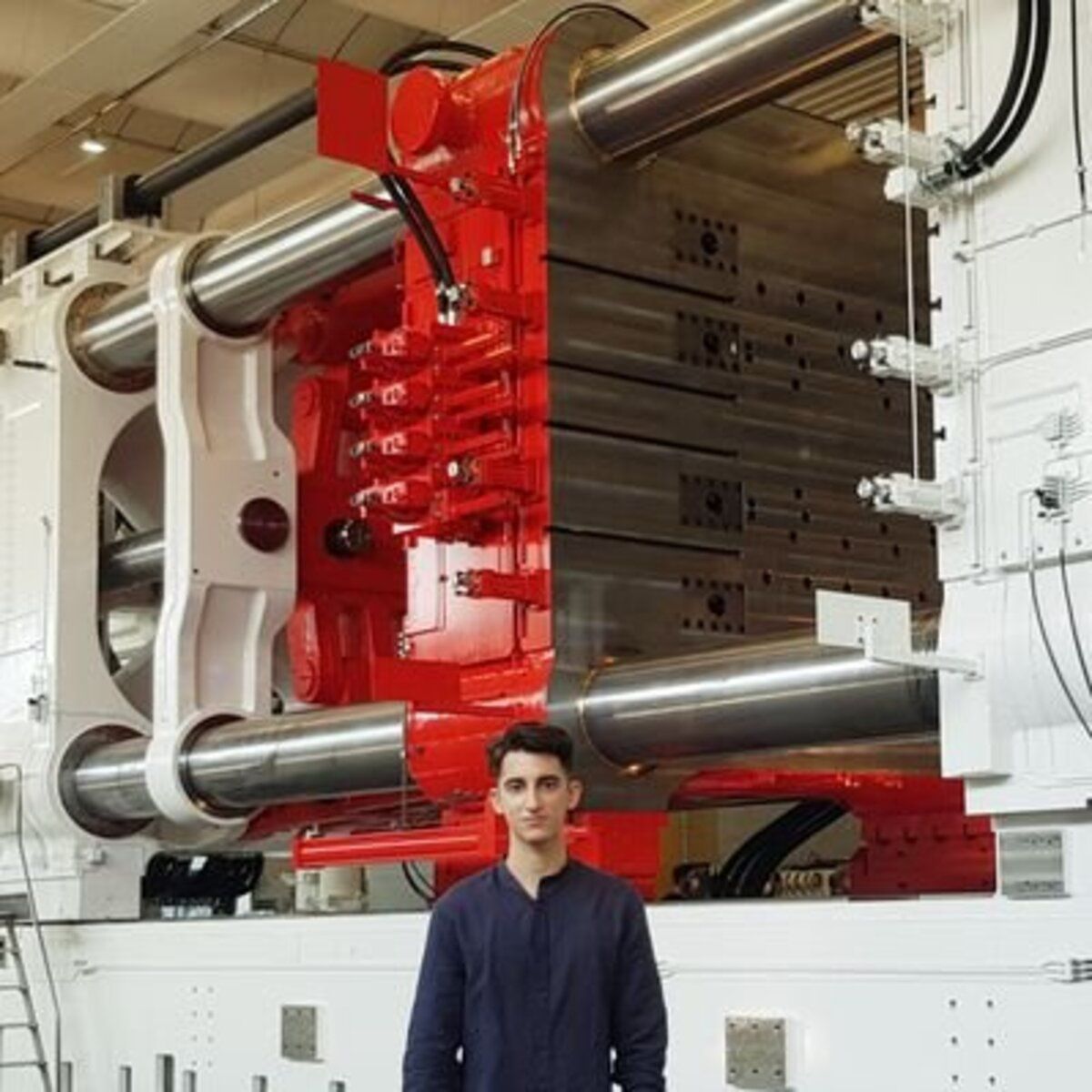
Scale was the historical limit. For years thixomolding lived on parts under roughly 5 kg but now Chinese programs are already moving much larger applications into mass production. Estes makes the same size bet with a different product and geography: US giga-thixo at about 30 kg/shot and one part per minute.
For more on Estes’ materials, manufacturing, and battery platform, visit estes.energy

