

Welcome to The Gigacasting Newsletter
New here? Subscribe for weekly updates
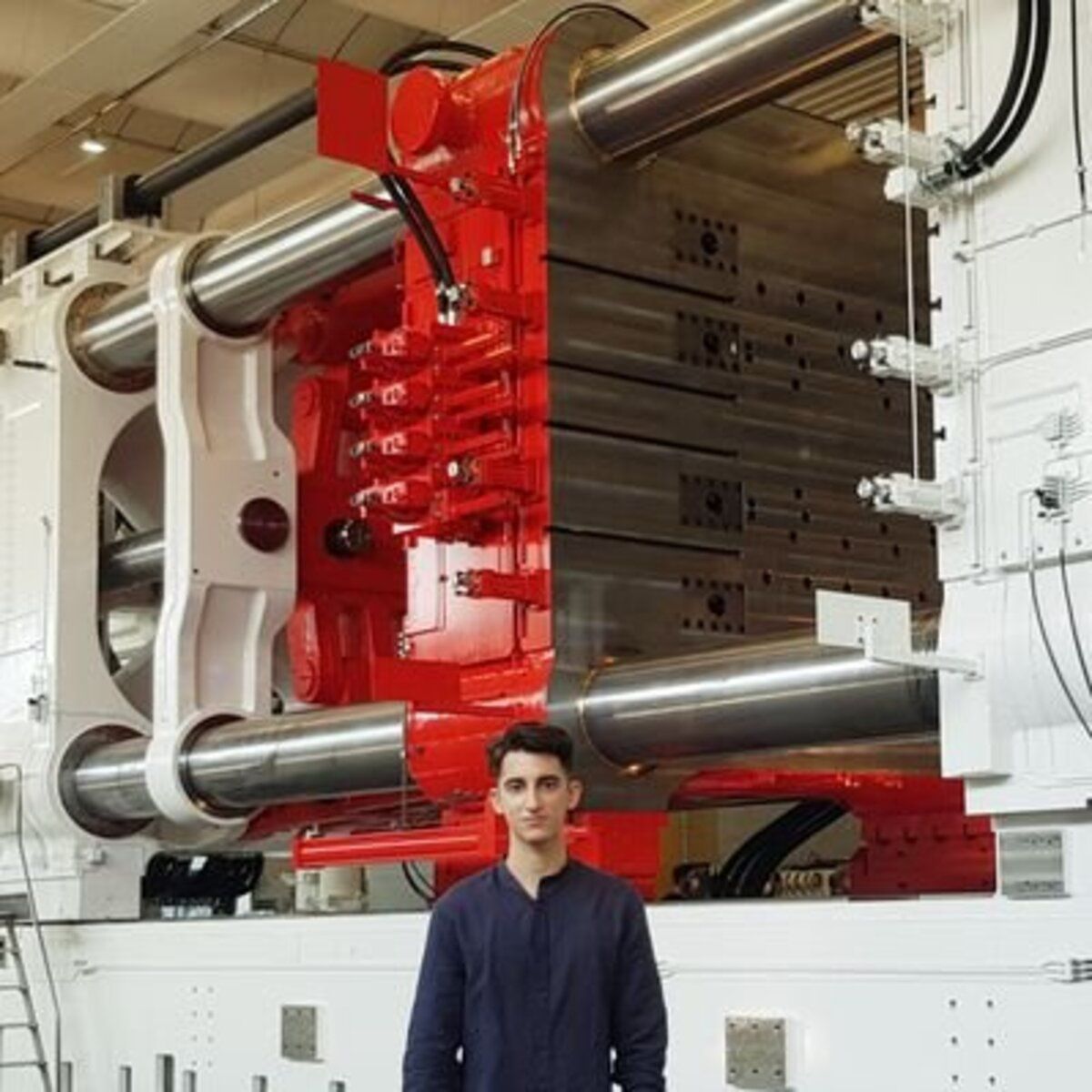
Duoli Technology's Gigacasting plant in Jintan, a district of Changzhou in China's Jiangsu province, is running its three large die-casting machines at full load and turning out up to 35,000 one-piece floor castings a month, according to a report published by the Jintan District government on 6 October 2026.
The plant is now co-developing two new underbody castings with SAIC and GM, with trial production due in the fourth quarter of 2026 and volume production phasing in from 2027.
The plant mainly supports the production of the Li Auto i6 (production figures in The Gigacasting Database). Molten aluminum is injected into the die under high pressure, and the RUB Gigacasting of the i6 comes out roughly every two minutes, after which a robot lifts it out and sends it on to trimming and finishing.
The plant says it has made 200,000 sets of floor castings so far this year, and that its sales have grown five- to six-fold from the same period last year.
Wu Guangjian, the plant's equipment director, explains the gain in simple terms: a floor that used to be assembled from more than 70 parts now comes out of the Gigacasting process as one. Where one floor used to take several hours, he says, the journey from die-casting to finished part now takes two to three hours.
Duoli puts the plant's yield above 90%. To hold it there, the plant stops one day a week to maintain its machines and dies, and gives every casting its own code in a manufacturing execution system (MES), the software that logs water temperature, die temperature and coolant flow in real time, so that a faulty part can be traced back to the machine and the shift that made it.
Coordinate Measuring Machines (CMM), blue-light scanning and routine line inspections then check the parts further down the line. Deputy general manager Lu Haiping calls Jintan the most automated plant in the Duoli group.
What has changed is the customer list. Jintan was set up mainly to supply mainly Li Auto and the district government presents the two new floor parts as the point where its customers widen to traditional carmakers. Several of Duoli's global customers have also visited the plant this year. Looking ahead, Lu says Duoli aims to bring in two more large die-casting systems over the next quarter and into next year.
Duoli, founded in 1998 as a maker of stamped and welded body parts, has built its Gigacasting business on Bühler machines from the start. It approved its first Gigacasting projects in 2020, chose Bühler as its strategic partner and sole supplier, and in 2021–2022 ordered a 6,100-ton Carat 610 and then a 9,200-ton Carat 920. The Carat 610 went into trial operation at Duoli's plant in Yancheng, Jiangsu, in the fourth quarter of 2022.
In September 2023 Duoli agreed to invest RMB 3 billion ($420 million) in a new Gigacasting and chassis-structures plant in Jintan, and its subsidiary Kunshan Daya was picked by an unnamed carmaker to supply a die-cast rear floor from 2025, worth an expected RMB 2.1–2.3 billion ($290–320 million) over the life of the programme.
In early 2024 Duoli ordered four more Carat 920s for Jintan, where construction began on 18 January 2024 on a first phase planned for two 6,100-ton and six 9,200-ton lines. By October 2024 Lu'an was supplying Gigacast parts in volume for some NIO models, and a new plant in Jinhua, Zhejiang, set up in March 2023 to serve mainly Leapmotor, was in trial production. The first Carat 920 at Jintan was powered up in early January 2025, about 30 km from Li Auto, which the plant called its biggest customer, and the first line was planned to be ready for volume production that July.
Duoli's machines by plant, and the vehicle programmes each one serves, are in The Gigacasting Database.
Source: Jintan District People's Government — 6 Oct 2026

