

Welcome to The Gigacasting Newsletter
New here? Subscribe for weekly updates
Magnesium offers the lowest density of any structural metal and superior vibration damping, making it highly attractive for EV lightweighting and NVH reduction. Yet its adoption in structural automotive components has long been limited by high material costs compared with aluminum, poor corrosion resistance that requires protective coatings and flammability risks during molten-metal processing.
Thixomolding’s semi-solid process addresses many of these challenges through safer handling, lower temperatures, and laminar flow. However, it has historically faced its own constraints, including limited shot weights and lower intensification pressure.
Recent declines in raw-material prices, combined with supportive Chinese government policies, have triggered a new wave of innovation. This has accelerated R&D and expanded magnesium thixomolding into larger, higher-performance automotive applications. Here are five notable new use cases.
1 Electric Motor Housings
On November 29th, Shanghai Automotive Industry Corporation (SAIC) released its 2nd generation magnesium alloy electric motor housing.
This product is the world's first magnesium alloy electric vehicle motor housing produced with Thixotropic injection molding technology (or Thixomolding).
The total weight of the motor housing is 13.7kg and it's reported to use AZ91D alloy. It weighs 30% less compared to the average aluminum motor housing and achieves a power density of 4.4 kW/kg.
SAIC reported that the thixomolding process greatly improves the strength, elongation and corrosion resistance of magnesium alloy materials, making its large-scale mass production application in the field of new energy vehicles possible.
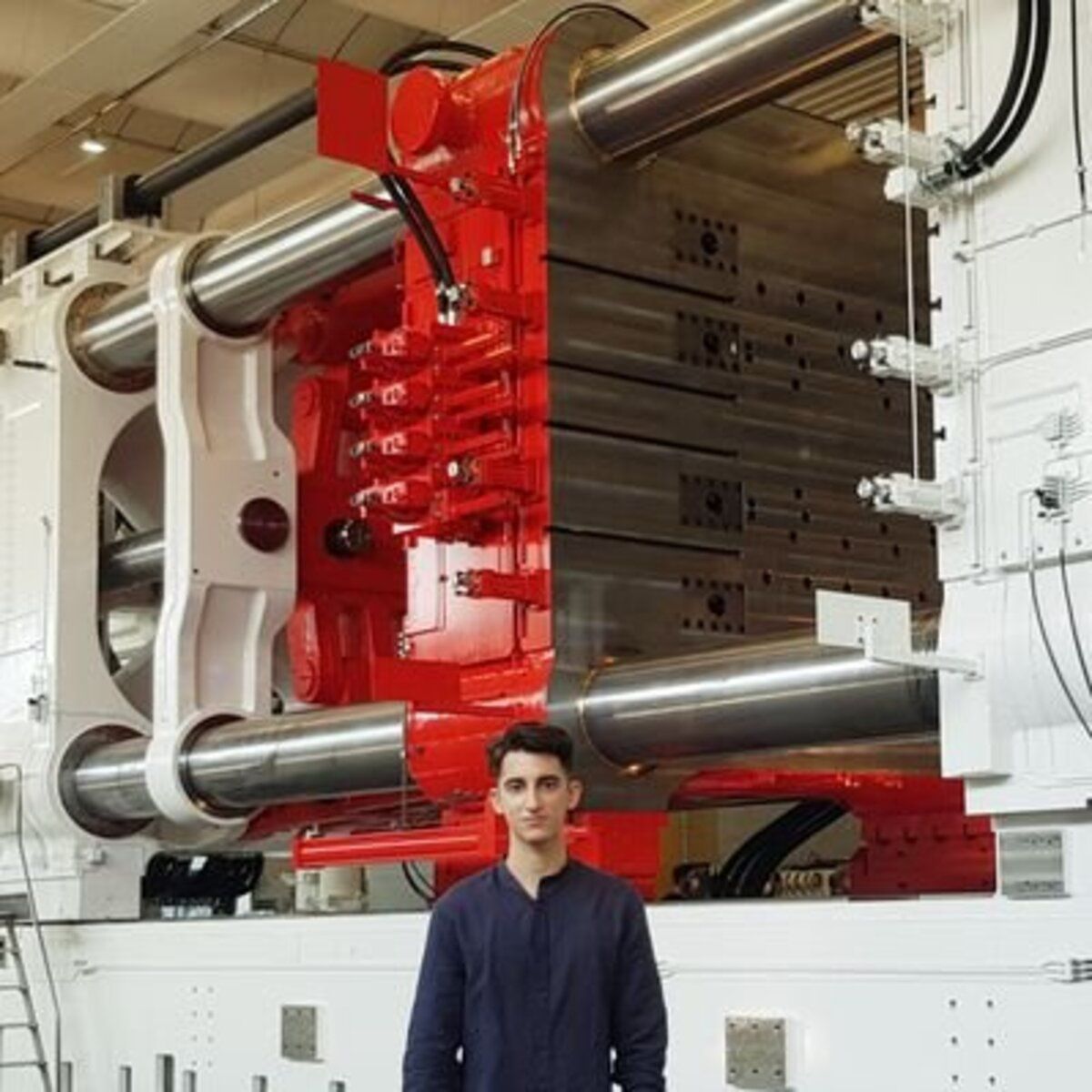
SAIC used Yizumi's 3,200 t magnesium Thixomolding machine to produce their 2nd generation motor housing parts while previously it used traditional high pressure die casting machines.
According to Yizumi, the 3200T thixomolding machine has an injection pressure of up to 100 MPa, which solves shrinkage compensation in existing thixomolding processes for large parts. “The large flow and high-speed response hydraulic system brings surging filling capacity, 160 mm screw, and the maximum stable discharge volume is >11 kg.”

2 Wheels
Bole Intelligent Machinery, Dongfeng Motor and Professor Zeng Xiaoqin’s team from Shanghai University and other collaborators, have successfully developed a 20 inch automobile wheel in magnesium alloy using thixomolding technology.
Leveraging semi solid injection molding technology, the research team utilized a high strength, corrosion resistant magnesium alloy developed by Shanghai Jiao Tong University along with the MTX3000D two platen thixomolding machine developed by Bole Intelligent Technology.
Bole’s CTO, Timo Günzel celebrated the achievement on LinkedIn and said that these are set to be “the first 20 inch rims made of magnesium using the thixomolding process, which will go into series production in the automotive industry in China.”

Thixomolded wheels promise to be cost competitive, lower weight and increase vehicle efficiency compared to traditional die cast aluminum wheels.
With a shot weight of over 16 kilograms, this achievement not only marks a significant step in wheel production but also sets a new world record for the largest injection volume of thixomolded magnesium alloy parts.
3 Cross Car Beams
A cross-car beam is the structural cross-member behind the dashboard that supports the steering system, airbags, and infotainment and general cockpit elements.
Baowu Magnesium produced with Haitian HMG3600 magnesium thixomolding machine a Cross Car Beam (CCB) with an injection weight of 6.1 kg and length of more than 1.4 meters.
The final product weighs 3.8 kg which compared to the traditional steel product weighs 50% less, according to Baowu Magnesium.
It should also be around 30% lighter than aluminum die casting with superior vibration damping, improving ride comfort and reducing NVH simultaneously.
Baowu started cooperating with Haitian for magnesium thixomolding machines in 2023 and successfully implemented a 1,300 t machine which is now in full production.

4 Shock Towers
Great Wall Motors, Baowu Magnesium and Haitian successfully test produced a magnesium alloy shock tower at Haitian's global test production center in China.
The magnesium alloy shock tower was realized using an HMG 3000, which is a 3,000 ton thixomolding machine capable of injecting up to 10 kg of semi-solid Mg alloys. The shock tower was reported to be defects free with no porosity or cold shuts.
Magnesium alloy components reduce weight more than 30% compared to their aluminum alloy equivalents, not only that but the advantage of using semi solid processes such as thixomolding, further reduce air porosity and costs while improving mechanical properties.
The improved properties are possible thanks to the laminar flow behavior of the semi solid slurry injected into the die.

Haitian launched a thixomolding with a 7,000 ton clamping force in 2025 with a double injection screw.
In the future Haitian will launch a machine for thick walled components to overcome limitations in the 3rd-phase injection pressure which negatively affect shrinkage porosity.
5 Car Seats
China FAW has developed and successfully assembled its first magnesium alloy Thixomolded seat frame.
In the global push for automotive lightweighting and low-carbonization, magnesium alloy stands out for its low density, high specific strength, and excellent vibration damping, making it ideal for passenger cars.
Recently, Hongqi’s R&D team announced that the seat frame assembly has passed function adjustment tests and is now entering strength/durability bench and full-vehicle testing.
To achieve lightweighting and high performance, the R&D team innovated across materials, processes, and structure.
They mastered specialized magnesium slurry refinement and virtual process simulation to improve mechanical properties and internal quality.
Structurally, they consolidated 19 parts into just 4 magnesium components while retaining the seat’s 8-way adjustment function.
This reduces assembly steps, boosts production efficiency, and cuts weight by 1.35 kg per set, a 26% reduction versus traditional steel.
Developed on Hongqi’s modular seat frame platform, its designed to be adaptable across multiple models in order to minimize mold-change costs and laying a strong foundation for large-scale mass production.


